
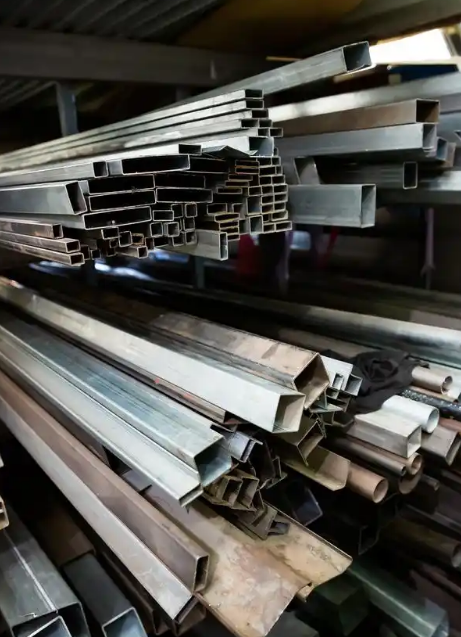
Introduction: Tackling the Growing Challenge of Industrial Waste
In the steel and coal coking plants, many small and medium-sized enterprises (SMEs) have long relied on off-site disposal or temporary storage to manage industrial waste such as dust, powder, and sludge. However, increasing regulatory pressure and operational challenges are making these approaches less sustainable.
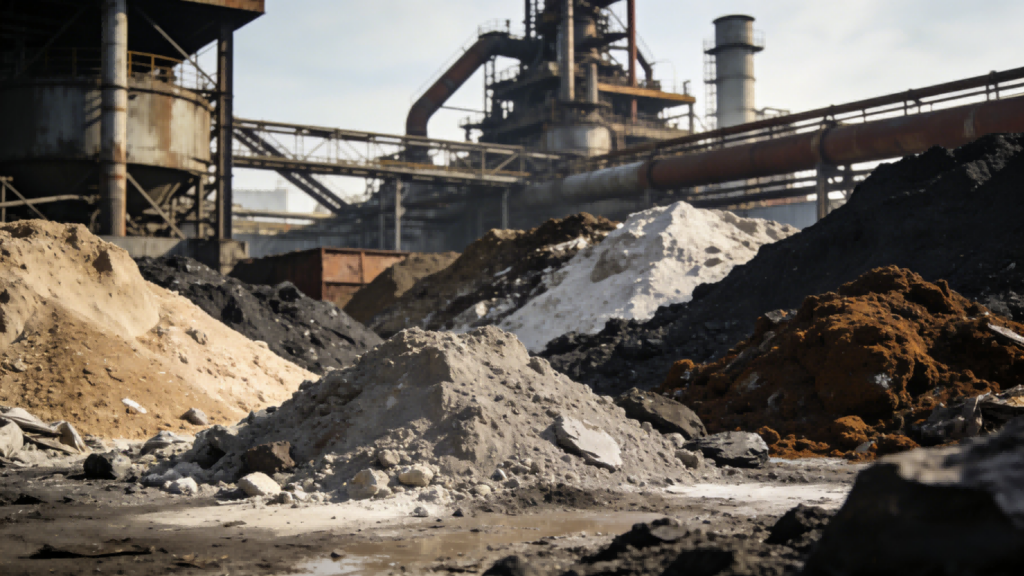
In reality, industrial solid waste has always been an unavoidable part of daily production. For SMEs in the steel and coal coking industries, how to manage and reuse these waste streams is not only a matter of compliance, but also a key factor that affects production stability, operating costs, and overall resource recovery efficiency.
Why Industrial Waste Management Has Become a Key Challenge for SMEs
Compared with large steel industries or integrated coking plants, SMEs often face more practical limitations in waste management. As a result, many solutions that seem simple in theory are difficult to run in a stable way over the long term.
These challenges come not only from the complex nature of the waste itself, but also from constraints in technology, investment, and environmental compliance.
Diverse Waste Sources
In SMEs, solid waste is usually generated across multiple production processes. The waste types are diverse, change frequently, and are hard to manage in one centralized system. Different operating steps continuously produce various powders and fine residues, which keeps waste management under constant pressure.
These industrial waste often share similar characteristics:
- Fine particle size or a high share of fines, which can easily create dust and increase on-site management pressure
- Complex composition, with noticeable changes in moisture and impurity levels
- Limited volume for each single waste type, making it difficult to support large continuous treatment systems
- Frequent but scattered generation, which affects cost control and production stability over time
As a result, many SMEs end up in a situation where the total volume is not huge, but the waste becomes difficult and costly to manage, and its long-term impact cannot be ignored.
Technical Limitations
SMEs frequently struggle with low briquetting efficiency, often due to improper binder selection or suboptimal particle size distribution. High concentrations of harmful elements such as Zinc in dust and ash hinder effective metal reduction.
Outdated equipment fails to meet modern emission standards, resulting in non-compliance. These limitations not only reduce operational efficiency but also increase the cost and complexity of waste treatment.
Reliance on External Disposal
Without a stable on-site reuse solution, many SMEs still rely on off-site disposal. However, this approach brings not only transportation and handling costs, but also strong dependence on local policies, disposal permits, and third-party capacity.
When external disposal options tighten, companies may face disposal delays, rising stockpiles, and disruptions to normal production, sometimes even leading to output reductions or shutdowns.
Financial and Operational Barriers
Traditional waste treatment technologies, such as rotary hearth furnaces (RHFs), involve substantial upfront investments—often reaching millions of dollars. SMEs typically lack the financial flexibility to support such investments.
Further challenges include the complexity of advanced processes, like dezincifikasiyang membutuhkan teknisi yang sangat terampil; penundaan produksi karena periode instalasi yang lama dan kebutuhan pemeliharaan yang sering; dan gangguan operasional, yang dapat menyebabkan hilangnya pendapatan dan menurunnya daya saing.
Regulatory & Compliance Pressure
Pemerintah di seluruh dunia memberlakukan peraturan yang lebih ketat tentang emisi industri dan pembuangan limbah. Sebagai contoh, tujuan Vietnam untuk memodernisasi industri baja pada tahun 2030 mencakup persyaratan khusus untuk pembangunan berkelanjutan. Kegagalan untuk mematuhi peraturan yang terus berkembang ini dapat mengakibatkan denda, penalti, larangan pembuangan sampah, pajak karbon, dan kerusakan reputasi yang signifikan.
Pembriketan: A More Practical Sustainable Industrial Waste Management Solution for SMEs
By compacting fine powders into regular briquettes, briket significantly reduces dust generation and material losses, while improving efficiency in transportasi, penyimpanandan pengisian tungku. It also helps stabilize furnace feeding and enhance in-furnace recovery by limiting powdering and segregation.
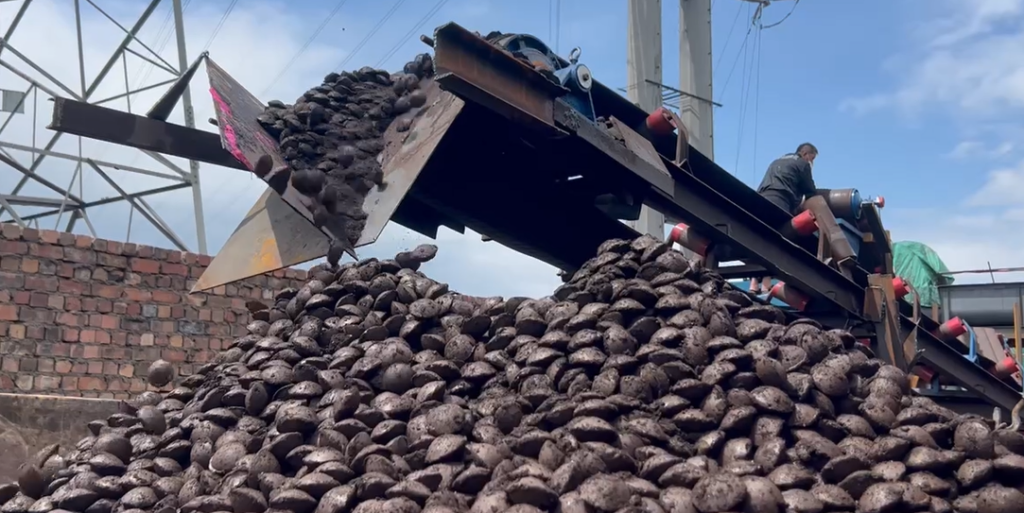
In the steel industry, briquetted iron-bearing waste can be efficiently recycled back into furnaces or sintering processes. In coal and coking plants, briquetted coal and coke fines can be reused as fuel or reducing agents, reducing return fines and improving material utilization.
However, for SMEs, the key challenge is how to maintain consistent briquette strength and low return fines under fluctuating raw material quality and complex impurity conditions.
This means that equipment alone or a general-purpose binder is often insufficient. A sustainable briquetting solution must be based on material-specific binder design, optimized formulations, and well-matched process parameters to ensure long-term operational stability and efficiency.
Jianjie Comprehensive Industrial Waste Management Solutions Tailored for SMEs
Jianjie offers a portfolio of cost-effective, scalable, and sustainable waste management technologies tailored to the unique needs of SMEs in steel and coal coking plants. These solutions empower SMEs to reduce waste, recover valuable materials, and maintain compliance with environmental standards
Core Technology: Upgraded Pembriketan and Dedicated Binder Solution
Jianjie has developed an integrated cold briquetting solution supported by environmentally friendly polymer binders, designed specifically for solid waste and fine materials commonly found in the steel and coal coking industries. The solution focuses on improving briquette strength, process stability, and long-term operational reliability under fluctuating raw material conditions.
Compared with conventional approaches, Jianjie’s briquetting binders deliver clear and practical advantages:
- Higher and more stable briquette strength
- Reduced fines generation and return fines during handling and use
- Lower material losses in transportation, storage, and charging
- Improved suitability for continuous and stable production
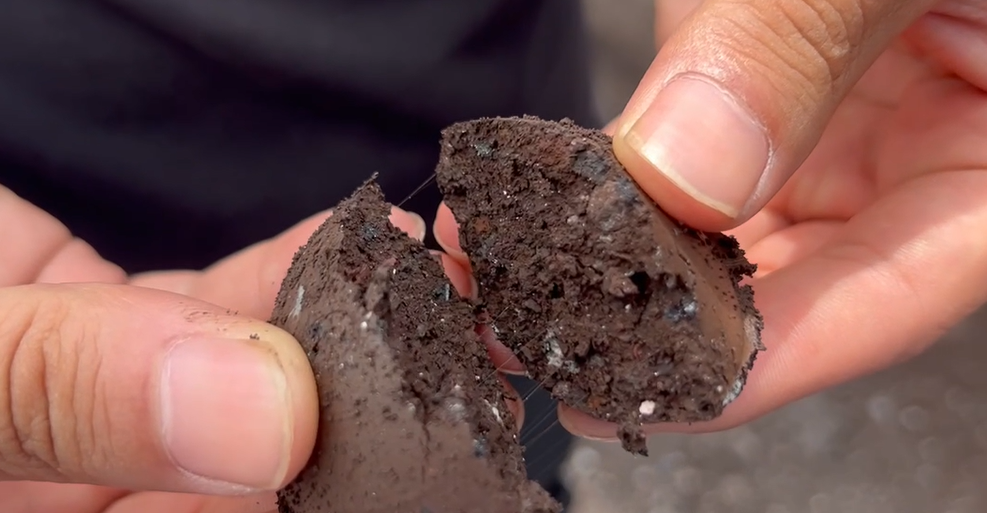
For high-temperature metallurgical applications, briquettes offer good heat resistance and stable behavior. They can be safely used in typical operating conditions, such as charging into electric arc furnaces (EAF), converters, and sintering processes, meeting the practical requirements of steel plant operations.
Material-Specific Binder Solutions for Complex Industrial Waste
In terms of binders, Jianjie has developed multiple series of dedicated briquetting binders tailored for materials characterized by fine particle size, large quality fluctuationsdan complex impurities. Instead of relying on general-purpose binders, Jianjie’s approach is based on material-specific matching.
Currently, Jianjie’s binder solutions are applicable to a wide range of fine industrial waste, including both steelmaking byproducts and metallurgical mineral fines, such as:

Jianjie Binder for Dedusting Ash Briquetting
Steel and coal-related industrial waste:
- Abu dedusting (Debu baja)
- Skala pabrik
- Terak baja
- Lumpur baja
- Hot briquetted iron fines
- Produk sampingan lain dari baja
- Coal dan Coke powder
- Manganese ore fines
- Chrome ore fines
- Nickel ore fines
- Other metal mineral powders requiring briquetting or agglomeration

Jianjie binder for mineral powders briquetting
One-Stop Delivery and Long-Term Operational Support
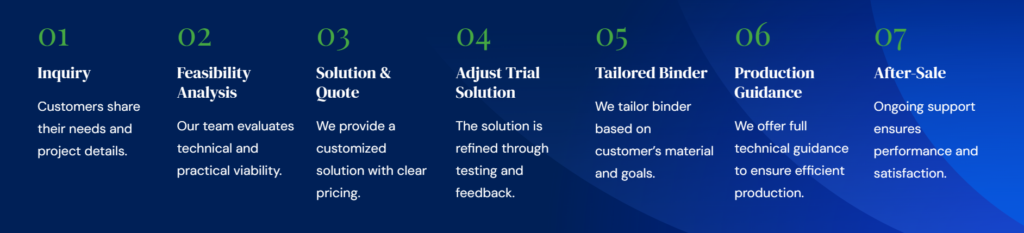
Jianjie menyediakan solusi end-to-end covering the entire lifecycle of solid waste recycling projects. From initial evaluation to long-term operation, the goal is to reduce implementation risks and minimize production disruptions for SMEs.
Layanan kami meliputi:
- Raw material testing and technical analysis
- Customized process and solution design
- Equipment installation, commissioning, and on-site training
- Remote monitoring, early-warning alerts, ongoing technical support, and on-demand engineering consultation to maximize system uptime and operational performance.
With this integrated service, SMEs can implement cold briquetting solutions more smoothly, maintain stable operation over time, and continuously optimize performance under evolving production and environmental requirements.
Implementation Roadmap: Helping SMEs Start Industrial Waste Recycling Upgrades Quickly
Kesimpulan: Membangun Masa Depan Industri yang Lebih Bersih dan Berkelanjutan
In the shift toward low-carbon and greener production, SMEs also have a practical path to achieve sustainability. With the right technology choices and continuous optimization, solid waste is no longer just a cost burden. It can become a valuable resource that can be reused.
If you are looking for a briquetting or waste recycling solution that fits your raw materials and production scale, feel free to hubungi Jianjie for tailored technical support.
You can also follow Jianjie on LinkedIn and other official channels for industry cases, technical insights, and practical waste recycling solutions for SMEs.Together, we can help the steel and coking plant move toward a cleaner, more efficient future.
-scaled.jpg)

 Indonesian
  English
  Arabic
  Chinese
  Russian