
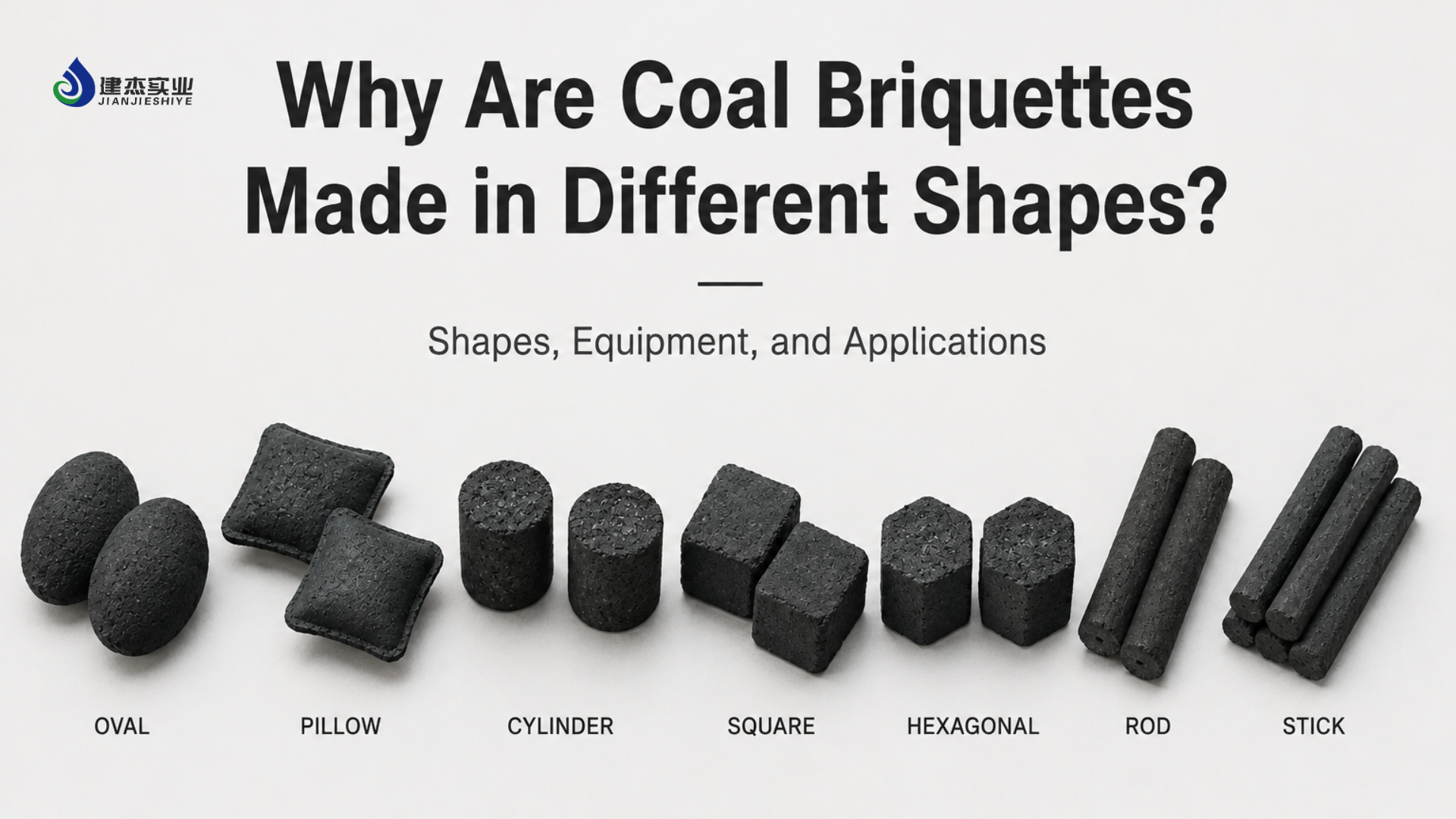
Coal briquetting is widely used to turn fine coal and coal powder into compact, easy-to-handle fuel. Depending on the raw material, equipment, and end use, briquettes can take different shapes, including pillow, oval, cylindrical, rectangular, and custom forms.
But why are coal briquettes made in different shapes?
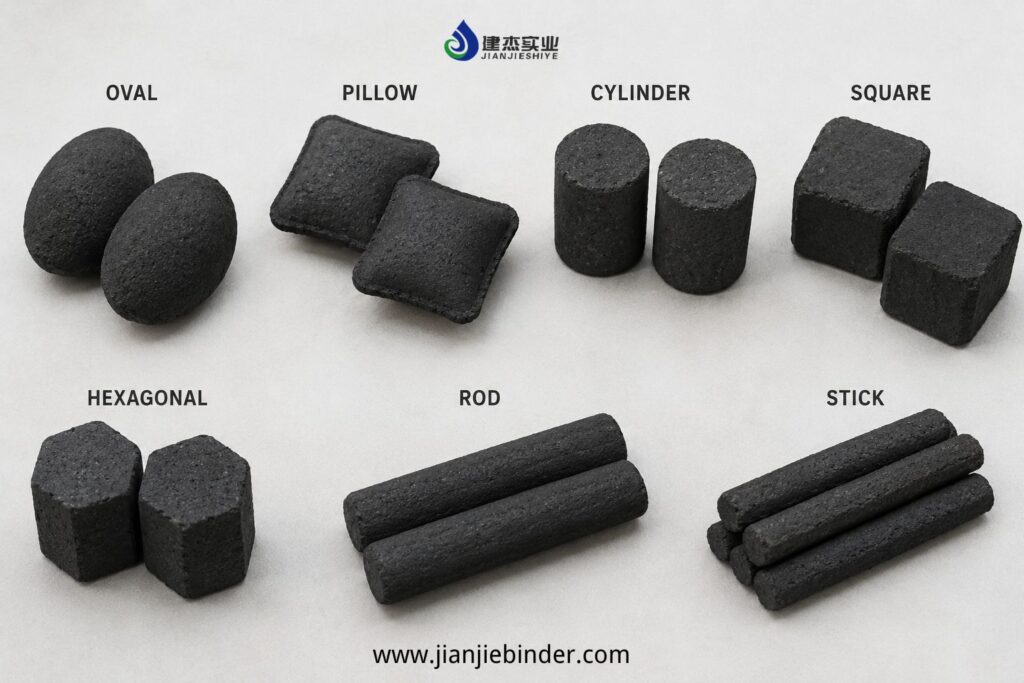
Because shape affects strength, handling, combustion, and production, and different shapes are better suited to different equipment and applications. Therefore, successful cold briquetting depends on choosing the right combination of shape, equipment, binder, and process conditions.
2. What Determines the Shape of a Coal Briquette?
Before choosing a briquette shape, several factors should be considered.
Raw Material
Coal type, particle size, moisture, density, and composition all affect how the material behaves during pressing.
Briquetting Equipment
Different machines use different forming mechanisms and pressure conditions, which limits or determines the shapes that can be produced.
Final Application
A briquette used as industrial fuel may have different requirements from one used for heating, gasification, or a metallurgical process.
Handling Requirements
If briquettes need to be transported over long distances or handled repeatedly, mechanical strength and resistance to breakage become particularly important.
Downstream Process
The briquette may also need to match the requirements of a specific feeding, combustion, or metallurgical system.
In practice, shape is not selected independently. It is part of the overall briquetting process.
Common Coal Briquette Shapes and the Equipment Behind Them
Different shapes are used for different purposes. The following are some of the most common forms found in coal briquetting.
| Briquette Shape | Typical Equipment | Why Choose It? | Typical Applications |
| Pillow / Oval | Roller briquetting press | Compact, relatively uniform, high production capacity | Industrial fuel, coal fines, heating applications |
| Egg / Almond | Roller press with shaped cavities | Easy handling, rounded edges, good mechanical stability | Fuel briquettes, industrial applications |
| Square / Rectangular | Roller, hydraulic, or mechanical press | High packing efficiency, large contact area | Industrial fuel, metallurgical materials |
| Cylindrical | Piston press, screw extruder, cylindrical briquetting equipment | Uniform geometry, adjustable diameter/length | Industrial fuel, gasification, heating |
| Rod / Stick | Piston or extrusion-type equipment | Long continuous or segmented form | Heating fuel, industrial combustion |
| Hexagonal / Polygonal | Specialized mold or extrusion equipment | Larger surface area and customized geometry | Specialized fuel and combustion applications |
| Block / Custom Shape | Hydraulic or specialized briquetting press | Flexible size and geometry | Industrial and metallurgical applications |
These categories are not absolute. The same general shape can sometimes be produced using different technologies, depending on the material and equipment design.
1. Pillow and Oval Briquettes: A Common Choice for Roller Presses
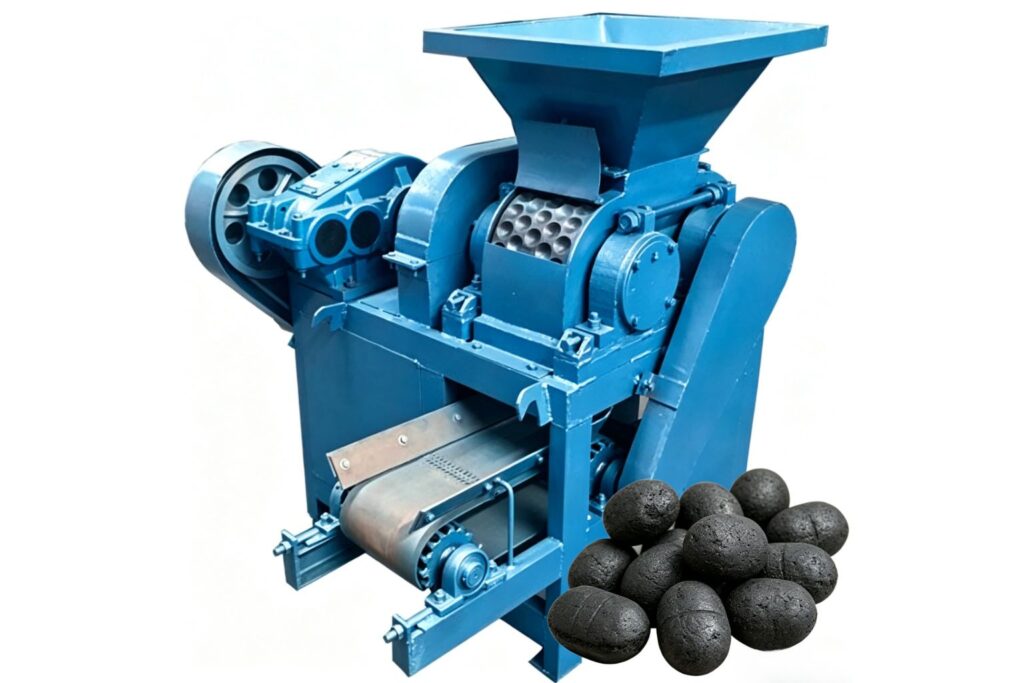
Typical equipment: Roller briquetting press
Pillow and oval briquettes are commonly produced by roller presses. Their compact shape makes them easy to handle, transport, and produce continuously at high volumes.
Why use this shape?
- Good mechanical strength
- Easy to store and bulk handle
- Suitable for high-volume production
Typical applications: Industrial fuel, coal fines, boilers, and other large-scale applications.
2. Cylindrical Briquettes
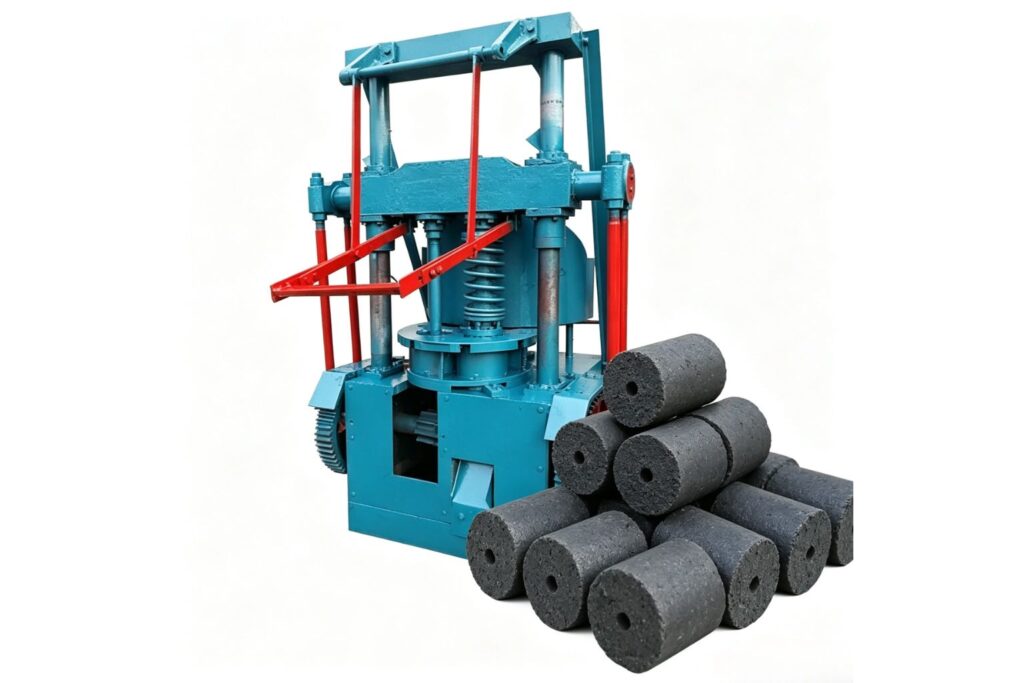
Typical equipment: Piston press, hydraulic press, or extrusion equipment
Cylindrical briquettes have a uniform diameter and can be produced in different lengths. This makes them suitable for applications where specific dimensions are required.
Why use this shape?
- Uniform size
- Flexible length
- Easy to feed into certain systems
Typical applications: Industrial fuel, heating, and some gasification applications.
4. Square / Rectangular Briquettes
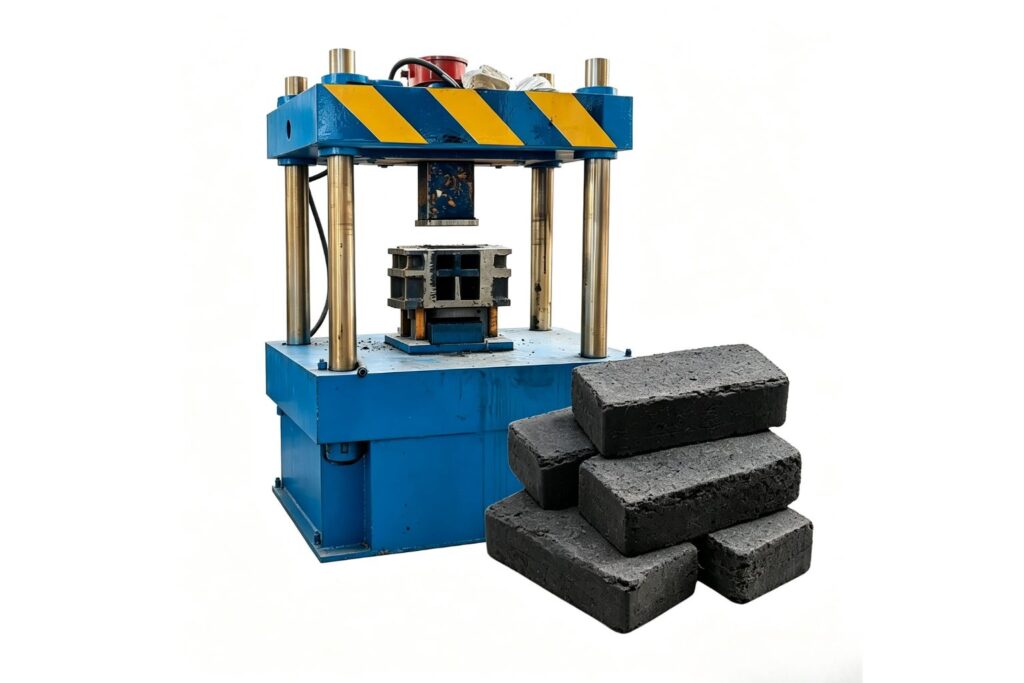
Typical equipment: Hydraulic, mechanical, or customized presses
Square and rectangular briquettes are often selected when larger pieces or specific dimensions are required.
Why use this shape?
- Larger individual pieces
- Efficient packing
- Easy to customize
Typical applications: Industrial fuel and specialized metallurgical applications.
5. Rod / Stick Briquettes
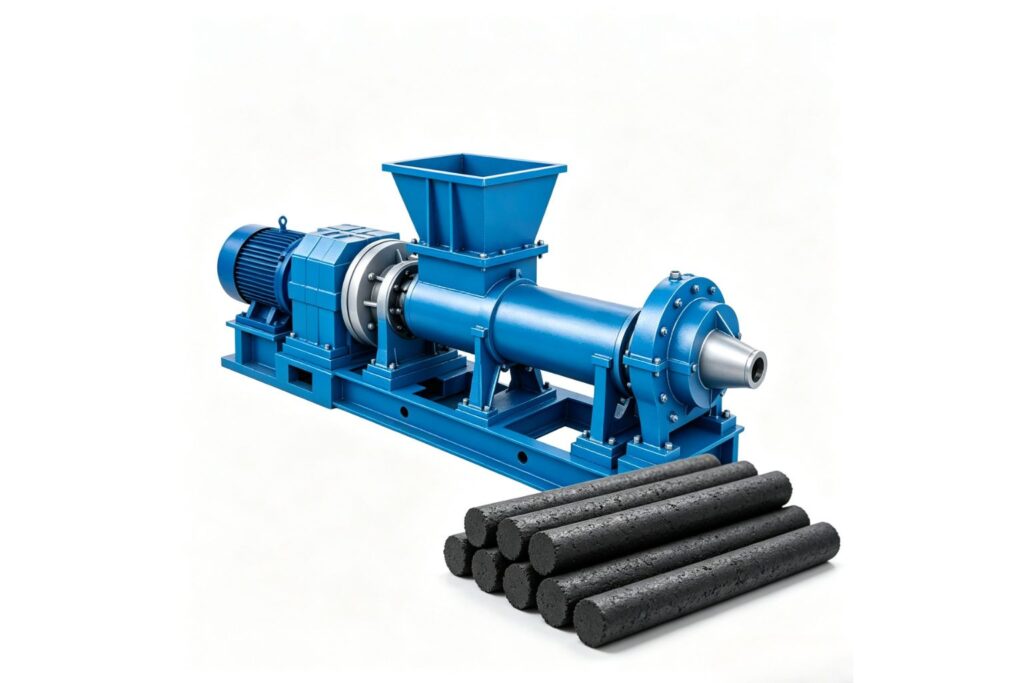
Typical equipment: Extrusion or piston-type equipment
Rod-shaped briquettes are usually produced continuously and then cut to the required length.
Why use this shape?
- Adjustable length
- Uniform diameter
- Suitable for continuous production
Typical applications: Heating fuel, industrial combustion, and selected gasification applications.
6. Customized Briquette Shapes
Typical equipment: Specialized or customized briquetting equipment
Not every briquette needs to follow a standard shape. For specific industrial processes, the shape and size can be customized according to the raw material, equipment, handling system, and final application.
Why use a custom shape?
- Match specific equipment
- Meet customer specifications
- Optimize handling or downstream performance
Typical applications: Specialized industrial and metallurgical processes.
How Is Briquette Shape Related to Briquetting Equipment?
Briquette shape and equipment are closely connected.
Different machines apply pressure and form material in different ways.
| Equipment | Common Shapes | Main Characteristics |
|---|---|---|
| Roller Briquetting Press | Pillow, oval, egg, customized cavity shapes | Continuous production and high throughput |
| Piston Press | Cylindrical, rod, block | High compression and controlled forming |
| Hydraulic Press | Block, rectangular, custom shapes | High and controllable pressing force |
| Extrusion Equipment | Cylindrical, rod | Continuous forming with uniform profiles |
However, this does not mean that one shape can only be produced by one type of equipment.
The same general shape may sometimes be produced using different technologies, while one type of equipment may also produce different shapes through changes in mold or roller-cavity design.
The key is to select equipment according to the material, required briquette shape, production capacity, and final application.
Does Briquette Shape Affect Binder Selection?
Yes.
A binder (adhesive) does more than simply hold coal particles together. Its performance depends on factor: such as raw material characteristics, moisture, equipments, application.
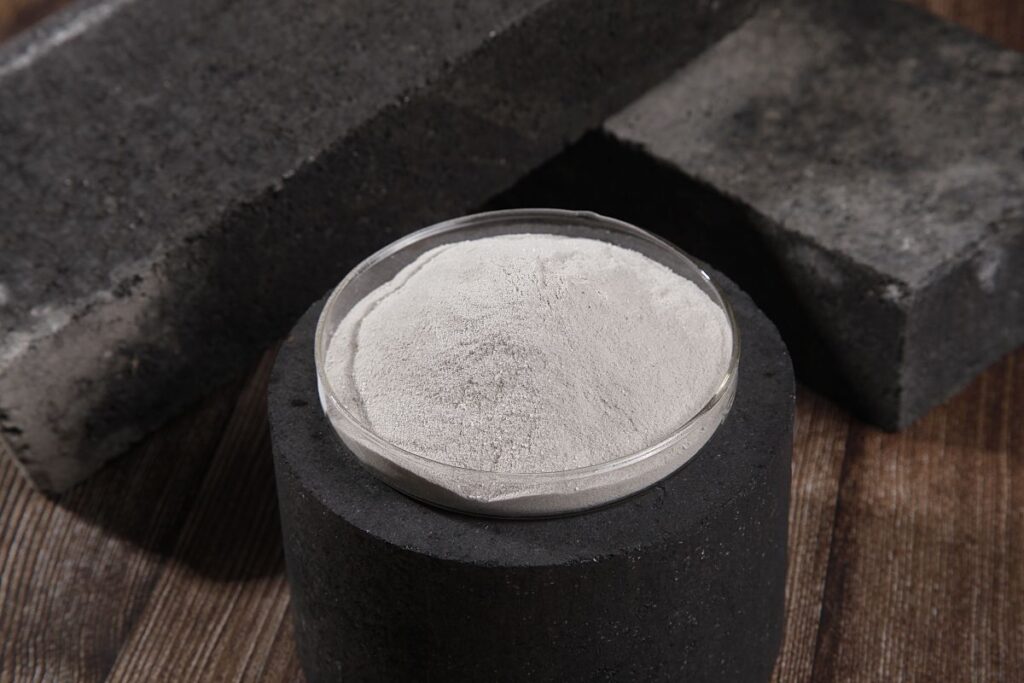
This means that the same coal does not necessarily require exactly the same binder conditions when the briquette shape or forming equipment changes.
For example, a high-volume roller press producing small pillow briquettes may have different process requirements from a hydraulic press producing large rectangular blocks.
Therefore, binder selection should be considered together with the entire briquetting process.
How Jianjie Binder Fits Different Briquetting Systems
At Jianjie Group, binder solutions can be customized according to different raw materials, briquette shapes, equipment, and application requirements.
Instead of treating every briquetting project the same way, the binder and its application conditions can be optimized around the actual production process.
Whether you are producing pillow, cylindrical, rectangular, or customized briquettes, the binder needs to work with the forming process—not separately from it.
What If You Are Not Sure Which Shape or Equipment to Choose?
Choosing a briquette shape can be difficult when several factors need to be considered at the same time.
If you are developing a new coal briquette or experiencing problems such as low strength, excessive breakage, unstable production, or low forming efficiency, the problem may not come from the binder alone.
Jianjie Group provides engineering and technical services for briquetting projects, helping customers evaluate the relationship between raw materials, binder selection, equipment, briquette shape, and production conditions.
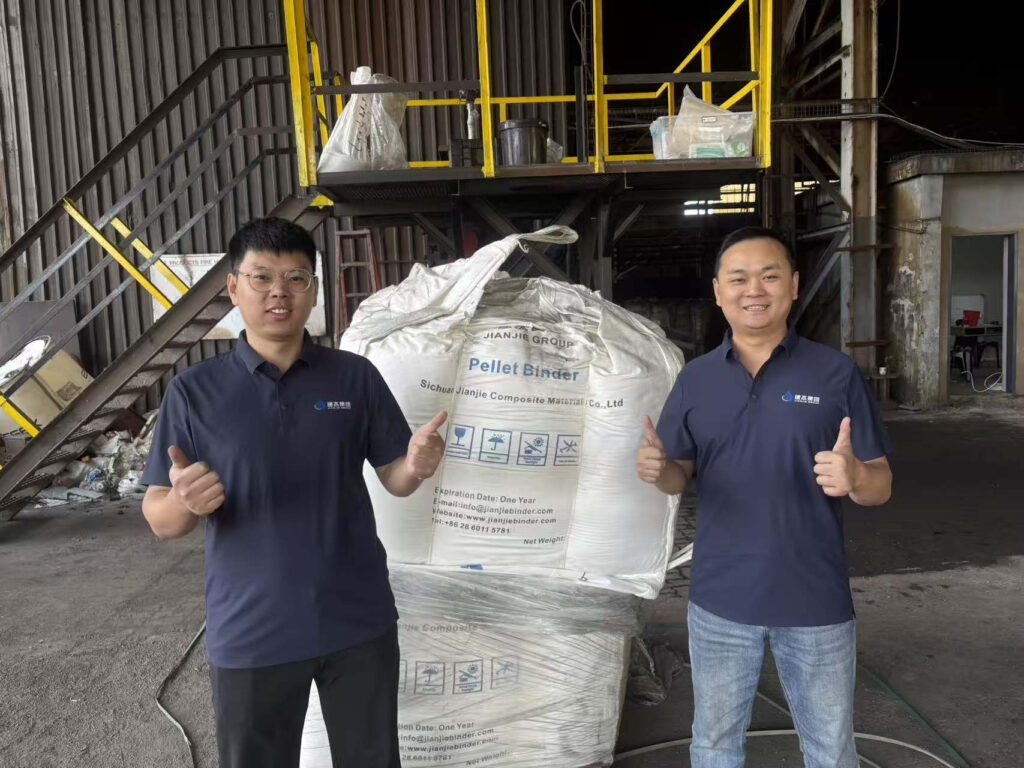
The objective is to help develop a stable and practical briquetting process—not simply select a binder or machine in isolation.
Summary
Coal briquettes come in different shapes because different materials, equipment, handling systems, and end-use applications require different product characteristics.
If you are developing a new coal briquette, changing its shape, selecting briquetting equipment, or experiencing problems with briquette strength and production stability, the binder and process should be evaluated together.
Looking for the right binder or briquetting solution?
Tell us about your raw material, desired briquette shape, equipment, and application, and our technical team can help you evaluate a suitable solution
Jianjie Group provides customized binder solutions and engineering support for coal briquetting projects.
Contact us by filling out the form below and we will get back to you asap.

Leave a Reply