
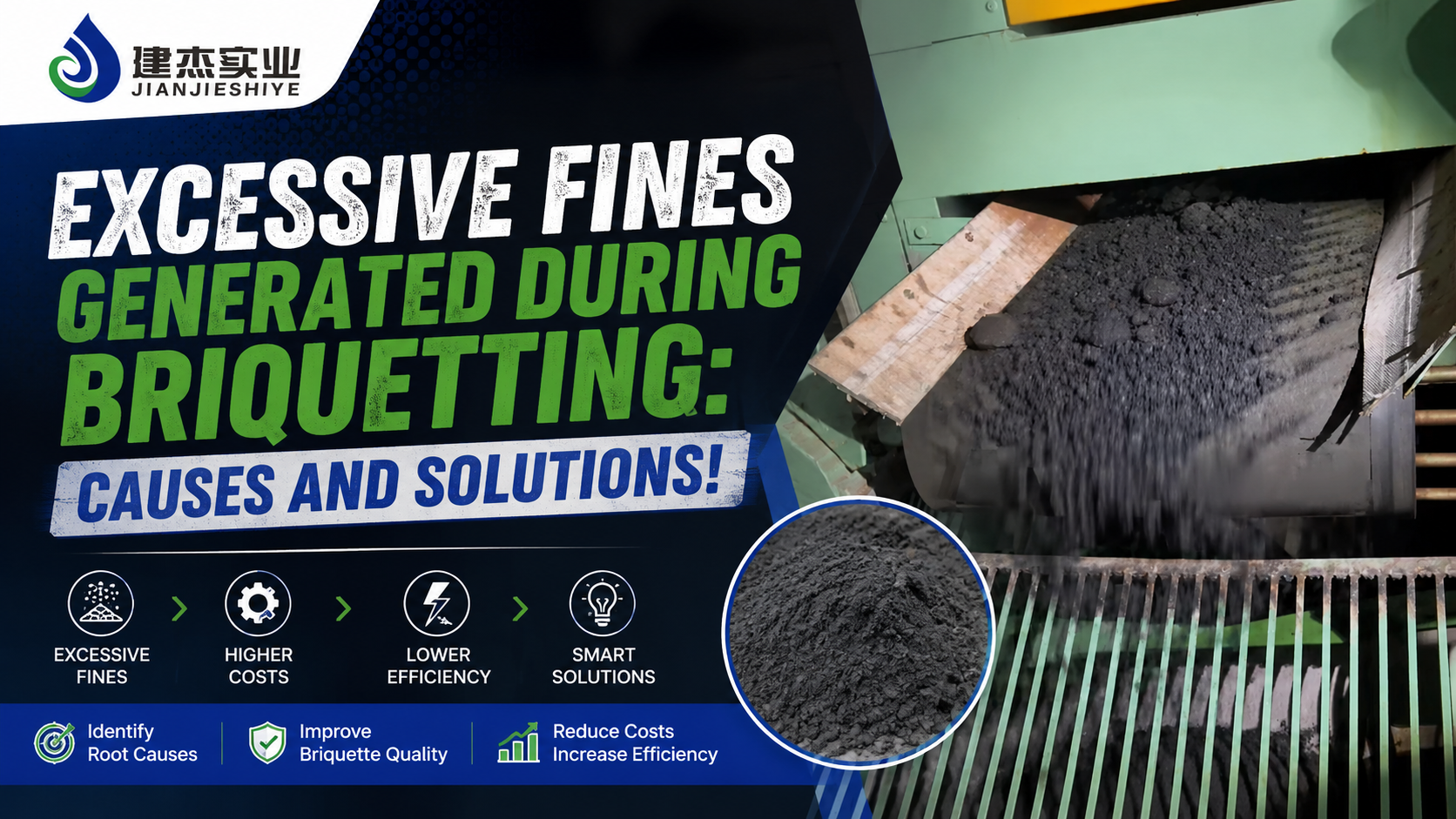
One of the most common complaints in briquetting production is:
“Our briquetting line is generating too many fines.”
Instead of producing strong, well-formed briquettes, a significant portion of the material remains as loose powder, broken briquettes, or undersized particles. This not only reduces the briquette forming rate but also increases material recycling, energy consumption, and production costs.
Whether you are briquetting steel mill dust, mill scale, iron ore fines, coal fines, or mineral powders, excessive fines can indicate deeper issues such as poor green (wet) strength, low cold compressive strength (CCS), inadequate binder performance, or improper process parameters.
If your briquetting operation is struggling with high fines generation, understanding the root cause is the first step toward improving briquette quality and production efficiency.
What Are the Briquette Fines/Powder?
Briquette fines are powder, fragments, or broken briquettes generated due to incomplete briquette formation or briquette breakage during handling, transportation, storage, and use.

They can be generated at different stages of the production chain:
- During briquetting
- During conveyor transportation
- During stockpiling and storage
- During truck or ship loading
- During unloading operations
- During charging into furnaces or kilns
A certain amount of fines is normal in any briquetting operation. However, when the fines ratio becomes excessive, it usually indicates problems with briquette formation or strength development.
How Excessive Fines/Powder Affect Briquetting Performance
Many manufacturers focus primarily on production output. However, excessive fines can have a significant impact on both productivity and profitability.

↓ Lowers Briquette Forming Rate
The more fines generated, the lower the percentage of raw material successfully converted into qualified briquettes.
A low forming rate means valuable material is not being utilized efficiently.

↑ Increases Repeated Work
Fines often need to be returned to the production line for reprocessing, increasing labor, energy consumption, and operating costs.
↓ Lowers Production Efficiency
Large volumes of recycled material can reduce throughput and create bottlenecks in the production process.
↑ Increases Production Costs
More fines mean more handling, more wear on equipment, and greater energy consumption.
↓ Lowers Product Quality
Customers expect strong, durable briquettes. Excessive fines may indicate inconsistent product quality and reduced process reliability.
5 Common Causes of Excessive Fines During Briquetting
1. Poor Binder Performance
The binder is one of the most critical factors in briquette formation.
If the binder cannot effectively bond particles together, briquettes may crack, break apart, or fail to form properly.
Common signs include:
- Low briquette forming rate
- Weak green briquettes
- Cracked surfaces
- Excessive fines under the roller press
Different raw materials require different binder systems. A binder that performs well with coal fines may not work effectively with steel dust or mill scale.
Solution
Select a binder specifically designed for your raw material characteristics and production requirements.
Customized binder formulations often provide stronger particle bonding and significantly reduce fines generation.
2. Insufficient Green Strength
Green strength refers to the strength of briquettes immediately after formation, before drying or curing.
Many briquettes appear acceptable at first but break apart during handling because their green strength is too low.
This problem often results in:
- Briquettes breaking on conveyors
- Damage during transfer
- Increased fines before curing
Solution
Optimize binder selection and dosage to improve green strength and ensure briquettes can withstand handling immediately after production.
3. Improper Moisture Content
Moisture plays a critical role in binder activation and particle bonding.
Excessive Moisture
Too much water may lead to:
- Poor density
- Surface cracking during drying
- Reduced structural stability
Insufficient Moisture
Too little water may result in:
- Incomplete binder activation
- Poor particle bonding
- Weak briquette formation
Both situations can contribute to excessive fines.
Solution
Determine the optimal moisture range through laboratory testing and maintain consistent moisture control during production.

4. Unsuitable Particle Size Distribution
Particle size distribution directly affects briquette quality.
When particles are too coarse:
- Large voids may form
- Bonding becomes difficult
When particles are too fine:
- Binder demand increases
- Material flowability decreases
Poor particle size distribution often results in weak briquettes and higher fines generation.
Solution
Optimize the balance between coarse and fine particles to improve packing density and briquette integrity.
5. Equipment and Process Issues
Even with a suitable binder, equipment conditions can affect briquette quality.
Common process issues include:
- Insufficient roller pressure
- Uneven material feeding
- Poor mixing quality
- Roller wear
- Inconsistent operating conditions
These factors can create weak briquettes that are more likely to generate fines.
Solution
Regular equipment inspection and standardized operating procedures help maintain stable briquette quality.
How Jianjie Helps Reduce Fines Generation
At Jianjie, we understand that every raw material behaves differently.

That is why we provide:
✔ Raw material analysis
✔ Laboratory briquetting tests (We provide free binder sample or you can send your raw materials to our lab for testing)
✔ Moisture optimization recommendations
✔ Process parameter guidance
✔ On-site technical support
Our goal is not only to improve CCS, but also to increase forming rates, reduce fines generation, and improve overall briquetting performance.
Looking to Reduce Fines in Your Briquetting Process?
Whether you are processing steel dust, mill scale, iron ore fines, coal fines, or other powder materials, Jianjie can help.
Contact our technical team today for a free material evaluation and customized binder recommendation.


