As steel plants continue to improve industrial solid waste recycling, more facilities are recycling fly ash, fly dust, and other steelmaking byproducts back into production. Fly ash briquetting is an effective way to recover valuable iron, reduce landfill waste, and lower raw material costs.
However, low briquette strength continues to limit recycling efficiency. Weak briquettes often crack during handling, generate excessive fines during transportation, or fail under furnace charging conditions, reducing recovery rates and disrupting production.
In this article, we will tap into the mainstream recycling method of fly ash, and why it’s so difficult to briquette. Hope this article will give you some insights.
Why is Steelmaking Fly Ash So Difficult to Briquette?
Compared with slag fines or mill scale, steelmaking fly ash is one of the most difficult steel waste materials to briquette. Its physical characteristics make it challenging to achieve high briquette strength and stable production.
Ultra-Fine Particle Size
Fly ash particles are extremely fine, giving them a very large specific surface area. The binder must coat millions of tiny particles evenly, requiring excellent dispersion and bonding ability. Conventional binders often cannot form a continuous bonding network, resulting in weak briquettes.
Variable Chemical Composition
Unlike uniform mineral concentrates, steelmaking fly ash varies significantly from plant to plant and even from different collection points within the same system. It may contain iron oxides, residual carbon, silica, zinc, alkalis, and in some cases a noticeable amount of free CaO (calcium oxide).
CaO in fly ash variability directly affects briquetting performance. For example, CaO is highly reactive with moisture, and can undergo hydration after forming. This reaction causes slight volume expansion inside the briquette structure, which may generate internal stress and microcracks over time. As a result, even well-formed briquettes can lose strength during storage or transportation.
In addition, different chemical components influence how the binder interacts with the surface of fly ash particles. Materials with higher alkali or CaO content may alter pH conditions and reduce binder efficiency, requiring customized formulation rather than a fixed dosage approach.
When fly ash contains a high concentration of zinc, steel plants generally recover the zinc before recycling the remaining iron-bearing material. This is because zinc has a significantly lower boiling point than iron, allowing it to volatilize and be separated in Rotary Hearth Furnace. (Jianjie has developed a speciality binder for fly ash with high zinc content to be used in RHF)
Because of this complexity, a “one-size-fits-all” binder often fails to deliver stable performance across different steel plants.
High Elastic Recovery After Pressing
Another overlooked challenge is the elastic recovery of fine powders. After leaving the briquetting rolls, compressed fly ash tends to expand slightly. If the binder cannot provide sufficient cohesion, microcracks develop immediately after forming, reducing the forming rate and ultimately lowering the cold crushing strength.
Why Molasses Often Fails
Although molasses has traditionally been used as a low-cost briquetting binder, it creates several challenges when processing steelmaking fly ash and fly dust.
The first issue is high binder consumption. Because fly ash consists of ultra-fine particles with a large specific surface area, molasses typically requires a relatively high dosage to achieve acceptable green strength, increasing overall production costs.
Molasses also tends to make the material sticky during briquetting. The sticky mixture can adhere to briquette rollers, causing unstable operation, poor briket formation, irregular briquette shapes, and frequent cleaning or maintenance. As a result, plants often experience low forming rates and excessive fines, reducing production efficiency and material recovery.
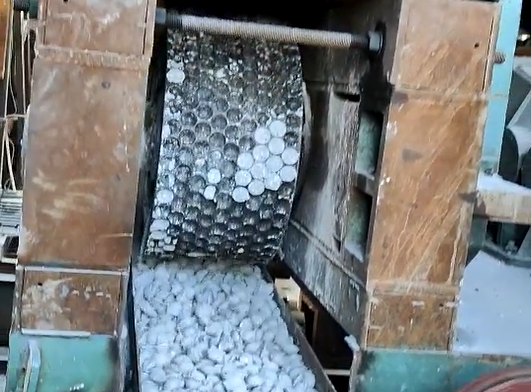
Even when well-formed briquettes are produced, long-term performance remains a concern. Molasses is sensitive to moisture, so briquettes can absorb water during storage and transportation, leading to a significant drop in cold compressive strength. In humid environments, they may soften, crack, or even disintegrate before reaching the furnace.
The final problem occurs during furnace charging. As an organic binder, molasses rapidly carbonizes and burns away under high temperatures. Without sufficient structural support, the briquette loses its structural integrity, generating fines that reduce furnace permeability, increase dust generation, and negatively affect furnace operation.
The Better Solution: Tailored Binder Solution
Successfully recycling fly ash requires more than simply replacing one binder with another.
A customized polymer or composite binder can be formulated according to the specific properties of the material. Typically added at only 3-5%, these binders create a strong three-dimensional bonding network that significantly improves briquette strength while maintaining process efficiency.
Jianjie Composite Binder is a high-performance polymer-based composite binder specifically developed for difficult-to-briquette industrial solid wastes, including fly ash, fly dust, steel dust, mill scale, and sludge. By combining organic and inorganic functional components, it delivers both excellent cold briquette strength and reliable thermal stability during furnace charging.
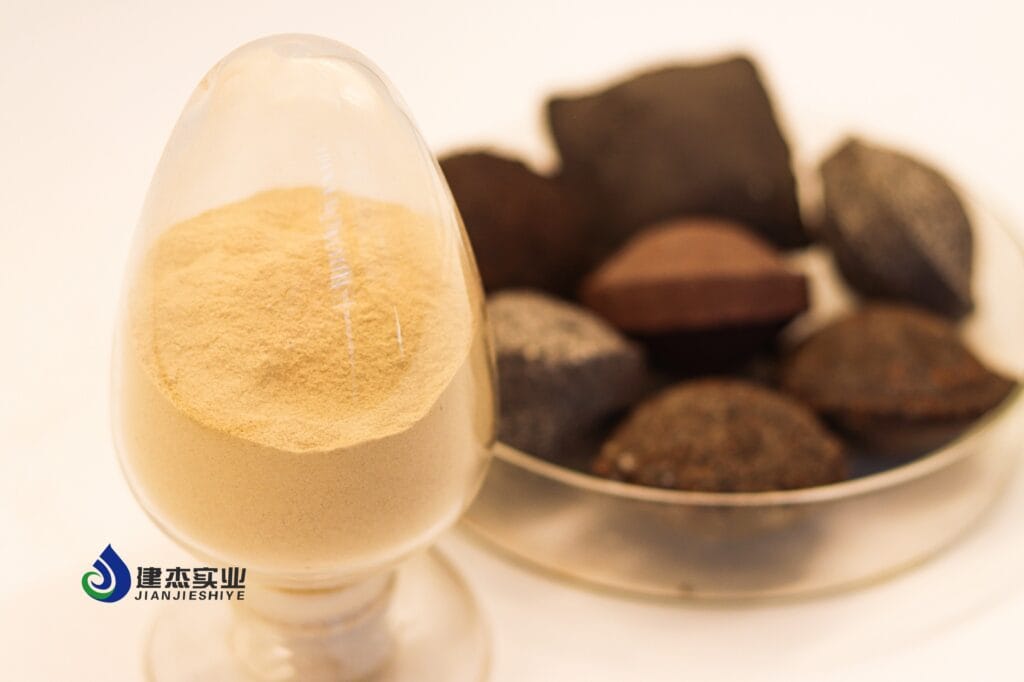
Just as important is technical support. Laboratory testing allows the binder formulation to be optimized before production, while process guidance—including moisture control, mixing time, and briquetting pressure—helps achieve stable, high-strength briquettes with lower fines generation.
At Jianjie, every project begins with testing. Our engineers analyze the fly ash’s particle size distribution, iron content, carbon content, CaO content, moisture characteristics, and other key properties before developing a customized binder formulation.
By combining customized binder formulations with technical expertise, we help steel plants achieve higher briquette strength, lower fines generation, and more stable long-term production.