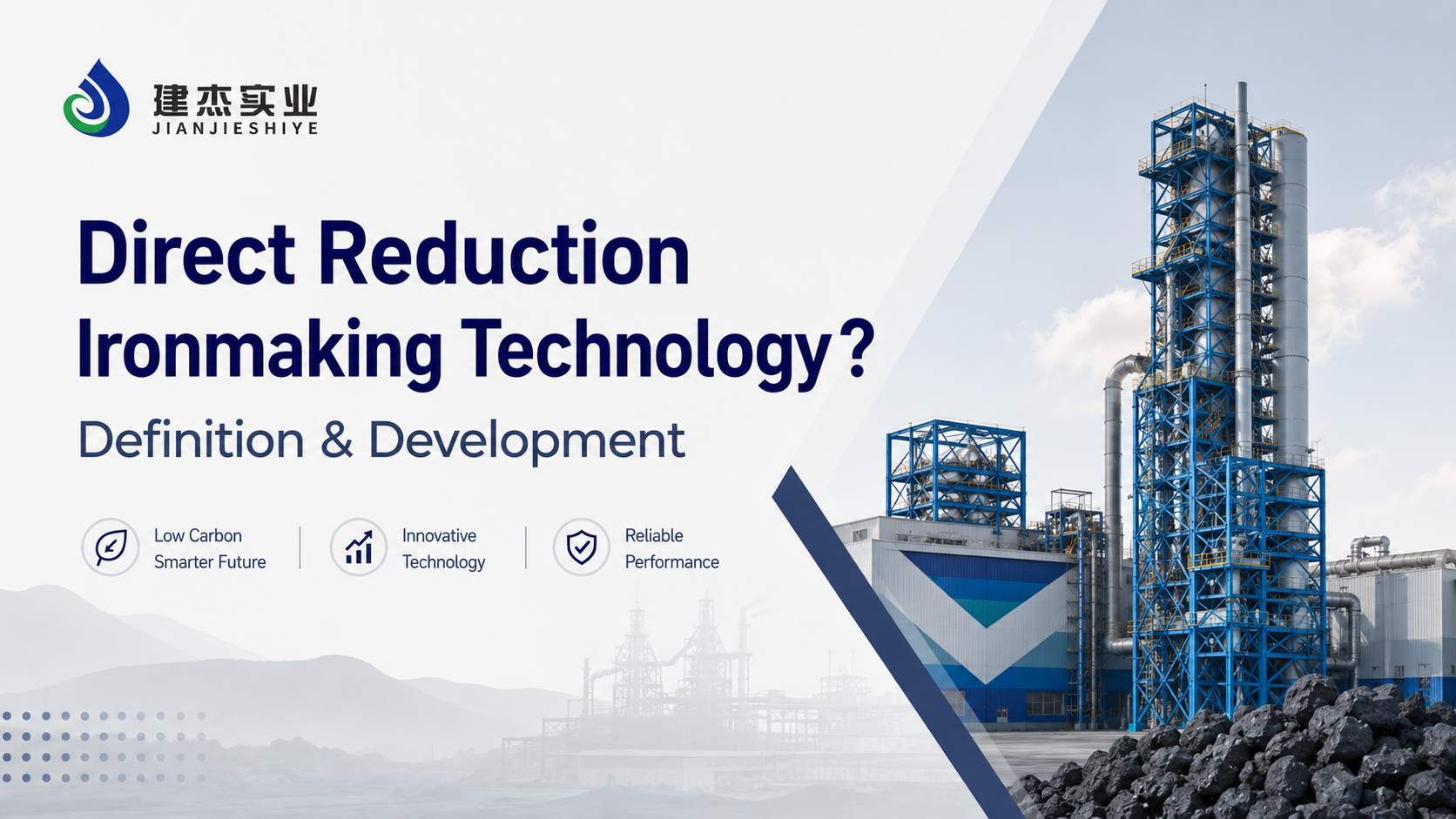
Due to the growing shortage of coking coal resources, the aging of coke ovens, and increasing environmental concerns regarding coke oven pollution, current ironmaking technologies are moving toward low-coke or coke-free ironmaking. Direct Reduction Ironmaking (DRI) technology perfectly aligns with this development trend, and China is paying increasing attention to its advancement.
During the “14th Five-Year Plan” period, China’s hydrogen-based direct reduction ironmaking technology focuses primarily on industrial demonstration. Meanwhile, shaft furnace direct reduction ironmaking technology based on coke oven gas is maturing, and the localization rate of its equipment is set to increase significantly. By the end of 2025, the actual production of shaft furnace DRI based on coke oven gas had reached approximately 2.8 million tons.
Direct Reduction Ironmaking Process
I. Direct Reduction Ironmaking
Overview of Direct Reduction
Direct reduction ironmaking is a method of obtaining metallic iron by reducing iron ore or iron-bearing agglomerates in a solid state below their softening temperature. Because the reduction temperature is low, the product possesses a porous, low-density, sponge-like structure, features low carbon content, and retains gangue impurities. Therefore, it is called Direct Reduced Iron (DRI) atau Sponge Iron.
When oxide pellets are used as raw materials, the product maintains a pellet shape but consists mainly of metallic iron; to distinguish it, it is called “metallized pellets.” To improve oxidation resistance and facilitate transportation, DRI can be hot-pressed during production, and this product is known as Hot Briquetted Iron (HBI).
Uses of Direct Reduced Iron
- Used as a high-quality scrap substitute and a premium raw material for Electric Arc Furnace (EAF) steelmaking.
- Used as a coolant in converter (BOF) steelmaking.
- Pure DRI is utilized in specialized cast iron and cast steel production.
- Used as a blast furnace (BF) burden to improve operational indicators.
II. Development Status of Direct Reduction Technology
Direct reduction ironmaking processes are divided into gas-based direct reduction and coal-based direct reduction.
Gas-Based Direct Reduction
This process centers on gaseous reducing agents (primarily H2 and CO). The reducing gas is mostly prepared by reforming natural gas or coke oven gas. It features high reduction efficiency and high product purity, making it the mainstream global DRI process (accounting for about 70% of total production).
Gas-Based Shaft Furnace Process (Mainstream Technology)
Typical Processes: Midrex process (USA), HYL process (Mexico).
Core Principle: Iron ore (lump ore or pellets) is charged from the top of the shaft furnace. High-temperature reducing gas (800–1000°C, containing H2 + CO ≥ 90%) is introduced counter-currently from the bottom to reduce iron oxides through the following stages:
Low-temperature stage: 3Fe2O3 + H2 → 2Fe3O4 + H2O
Mid-temperature stage: Fe3O4 + 4H2 → 3Fe + 4H2O
High-temperature stage: FeO + H2 → Fe + H2O (similar reactions occur with CO).
Key Equipment:
Shaft Furnace: Divided into a preheating zone, reduction zone, and cooling zone (the reduced product is cooled below 100°C using an inert gas).
Reducing Gas Preparation System: Natural gas undergoes steam reforming (CH4 + H2O → CO + 3H2) to generate the reducing gas.
Process Features:
High metallization rate (90%–95%) and low product impurities (S ≤ 0.01%), ideal for high-quality steel production.
Continuous production with large single-furnace capacity (a Midrex shaft furnace can produce up to 5,000 tons per day).
Heavily reliant on natural gas resources; production costs are sensitive to gas prices (making it ideal for gas-rich regions).
Coal-Based Direct Reduction
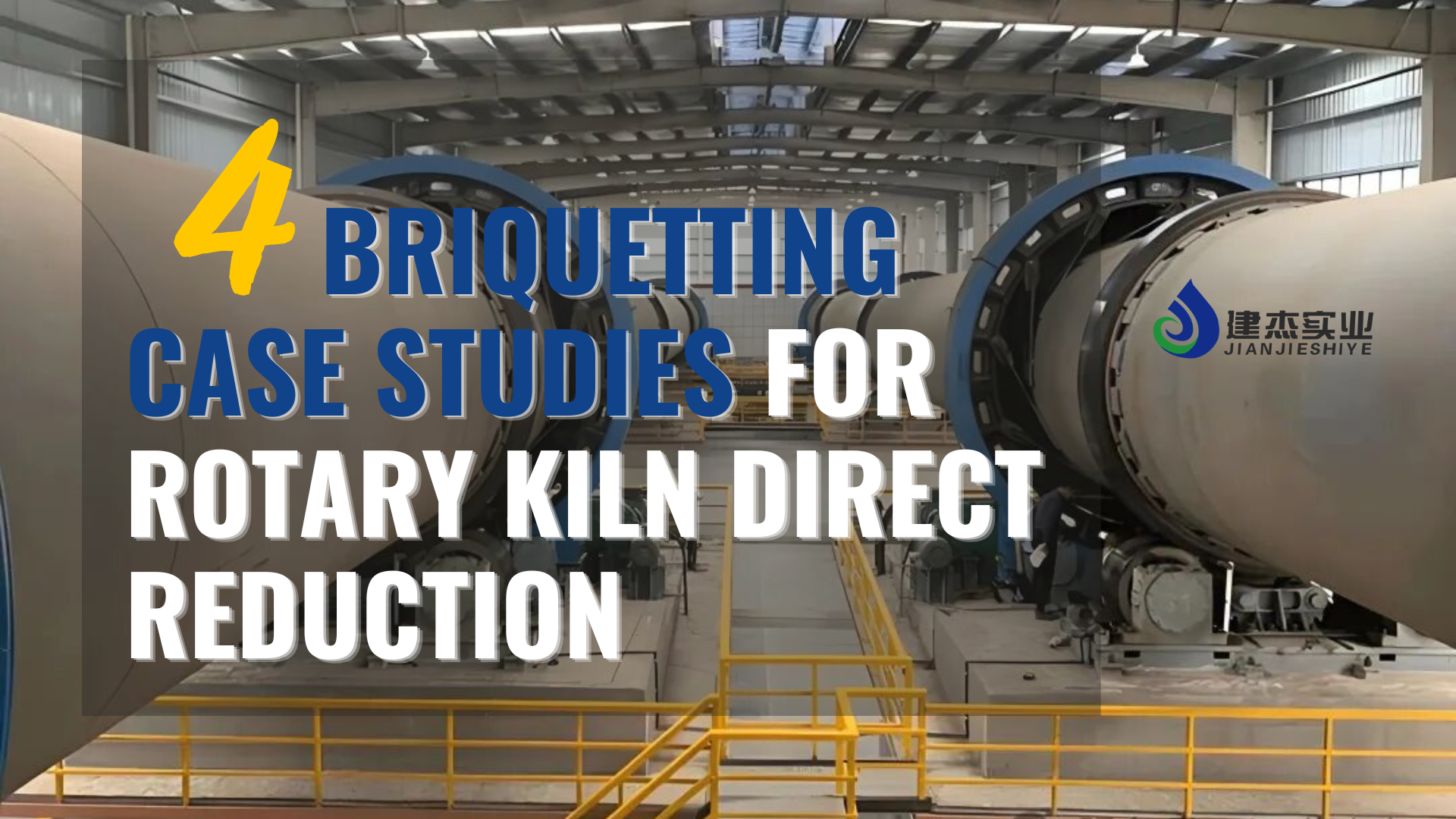
Coal-based direct reduction uses coal as the reducing agent and does not rely on natural gas or metallurgical coke, aligning well with China’s resource endowments. Currently, the mainstream industrial processes are the Rotary Kiln, Rotary Hearth Furnace (RHF), Dan Tunnel Kiln. Among these, the rotary kiln accounts for over 95% of total coal-based DRI production. The rotary hearth furnace has seen rapid adoption in recent years for solid waste recycling and direct reduction, while the tunnel kiln is mostly used for small-scale production.
Because China lacks abundant natural gas resources, it cannot currently develop its metallurgical sector heavily around natural gas. At this stage, the most realistic and reliable technological path is utilizing coke oven gas to produce DRI. This represents the most practical approach for China’s green metallurgy. Concurrently, Jianjie has been deeply engaged in the industry, continuously tackling key technical challenges in coal-based direct reduction. By relying on binders and cold-bonded pellet technologies, Jianjie assists in the industrialization and implementation of domestic coal-based direct reduction.
Classification of Coal-Based Direct Reduction Ironmaking Processes
Rotary Kiln Process
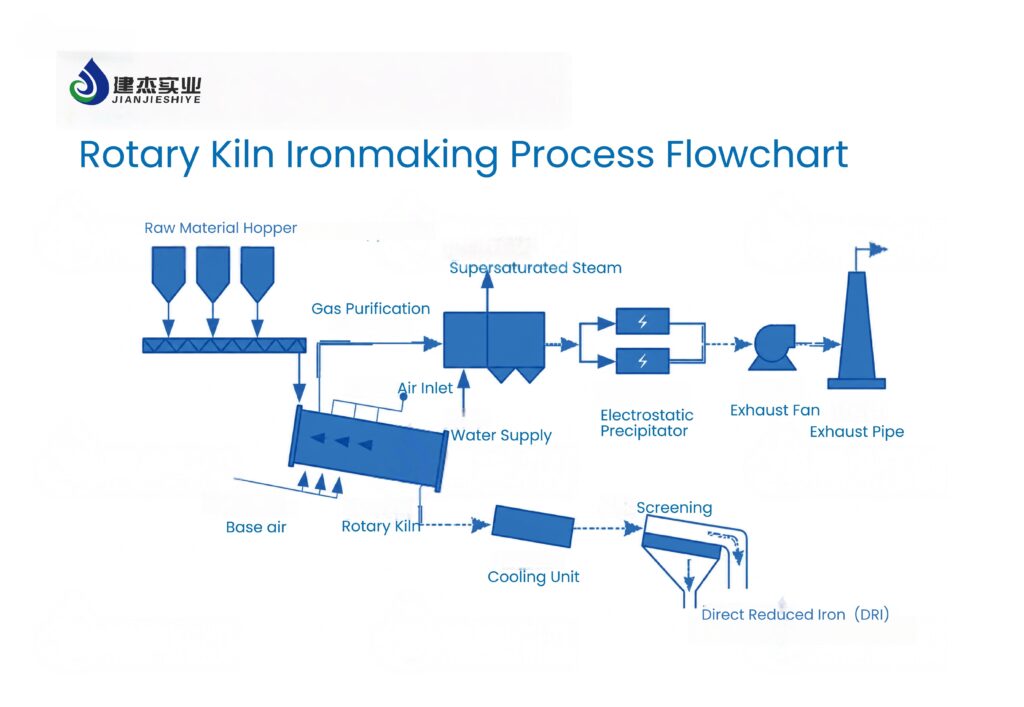
Globally, the rotary kiln process accounts for over 95% of total coal-based direct reduction ironmaking production. There are three types of rotary kiln processes: the one-step method, the two-step method, and the cold-bonded pellet method.
“One-Step Method”: Finely ground iron concentrate is pelletized, dried, and preheated to 900°C on a grate machine, and then fed directly into the rotary kiln for induration and reduction. All steps are completed continuously on a single production line.
“Two-Step Method”: The process is completed in two separate stages. First, iron concentrate is pelletized and subjected to high-temperature oxidative roasting at 1300°C to create oxidized pellets. Next, these oxidized pellets are fed into the rotary kiln for reduction. These two processes can be conducted independently at different locations.
“Cold-Bonded Pellet Method”: A small amount of specialized composite binder is mixed into magnetite concentrate powder to form pellets, which are dried and solidified at around 200°C before being sent into the rotary kiln for reduction. This eliminates the high-temperature oxidative roasting and induration stage.
The most famous rotary kiln process is the SL-RN process, a combination of the SL and RN processes. Developed in 1954 and industrialized in 1969, it experienced rapid growth. While the SL-RN process can use coal as a reducing agent to achieve a metallization rate of around 93%, it suffers from major drawbacks. First, “accretion” (ringing/scaling) inside the kiln has long hindered its development. Furthermore, it suffers from low efficiency, slow reduction speeds, and high energy consumption, requiring up to 1,000 kg of coal per ton of sponge iron.
Rotary Hearth Furnace (RHF) Technology
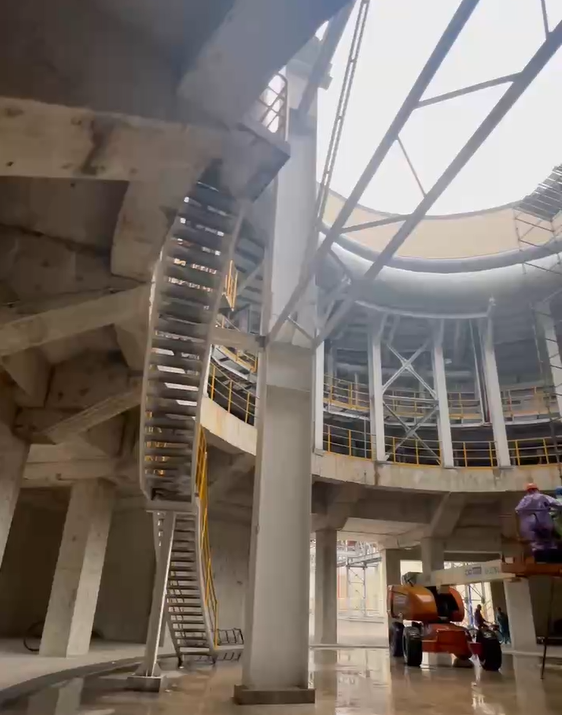
FASTMET Process
The rotary hearth furnace originated from the annular heating furnace originally used to heat steel billets in rolling mills. In recent years, it has been adapted for treating metallurgical dust and waste, evolving into an ironmaking facility capable of producing metallized pellets while treating steel plant dust.
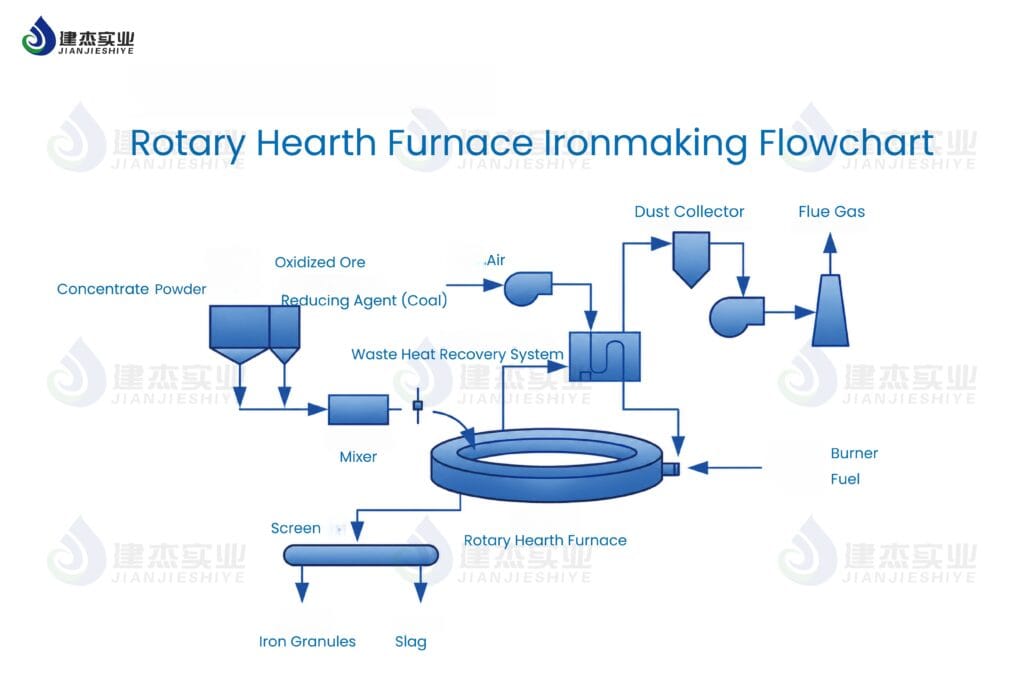
The primary equipment of the FASTMET process is the rotary hearth furnace, which features a sealed, donut-shaped design where the hearth rotates horizontally around a central axis. Burners installed on both sidewalls provide the necessary heat. Finely ground reducing agents, binders, and iron concentrate are blended uniformly, pelletized, dried, and then evenly distributed onto the rotating hearth. As the hearth rotates, the carbon-composite pellets are heated to 1250–1350°C, and DRI is obtained after 10–20 minutes of reduction. The DRI is continuously discharged by a screw mechanism at a temperature of about 1000°C.
Depending on production needs, the discharged sponge iron can be hot-briquetted (HBI), cooled using a rotary drum cooler, or hot-charged into a melting furnace to produce hot metal (the combination of Fastmet and melting is called the FASTMET process). Fuel (natural gas, oil, or coal) and preheated air enter the furnace through burners to combust (including the secondary combustion of gaseous reduction products like COF), generating sufficient temperature and heat. The flue gas flows counter-currently and exits via the exhaust port near the charging inlet. After secondary combustion, heat exchange, and scrubbing/dust removal, it is discharged through the stack.
Applications of FASTMET Process
Producing DRI or HBI from Iron Concentrate Powder: Iron concentrate powder and pulverized coal are mixed and briquetted before being charged into the RHF. The pellets are heated under a controlled reducing atmosphere. Upon reaching the reaction temperature, iron oxides are reduced to metallic iron, with coal supplying all the required thermal energy. The exiting sponge iron carries high sensible heat and can be processed into HBI for easy transport and storage. The resulting HBI features a Total Iron (TFe) content of 92%, a metallization rate of up to 95%, ~4% Carbon, ~2.4% gangue, and only 0.04% Sulfur, demonstrating high purity and excellent consistency compared to variable scrap steel.
Recycling EAF Dust and Mill Scale: Electric Arc Furnace (EAF) dust and mill scale contain significant amounts of non-ferrous metal oxides (such as zinc, lead, and cadmium), which are classified as hazardous wastes. In this dry process, these non-ferrous oxides volatilize into gases and are captured in downstream gas treatment systems, transforming hazardous waste into valuable raw materials for non-ferrous metal extraction. The zinc removal rate (ZnO) in the RHF exceeds 95%, and the resulting sponge iron reaches a metallization rate of up to 91%. The volatilized ZnO-rich dust is captured by baghouse filters and can be sold as raw material for zinc smelting.
Recycling Traditional Integrated Steel Plant Wastes: This includes converter (BOF) dust, mill scale, hot-rolling sludge, continuous casting scale, and blast furnace dust/sludge. These materials generally have high carbon content and lower zinc/lead/cadmium levels compared to EAF dust. Due to the high iron and carbon content in the raw materials, the RHF treatment yields sponge iron with a metallization rate above 90%, while the captured flue dust remains rich enough in ZnO to be recycled for revenue.
ITmk3 Process
The ITmk3 process represents the third generation of ironmaking technology. Based on the Fastmet process, it uses iron ore fines and pulverized coal to produce carbon-composite pellets. The pellets are charged into a rotary hearth furnace and heated to 1300–1500°C. Within just 10 minutes, the pellets are reduced and melted, completely separating the iron nuggets (iron granules) from the slag.
The resulting premium iron nuggets are ultra-pure and free of impurities, making them excellent for EAF use. The ITmk3 technology is highly adaptable to various iron ores and coal types, enabling the single-step processing of iron fines or low-grade iron-bearing materials (magnetite, hematite, or iron-bearing dust) into high-quality iron nuggets 10–20 mm in diameter. By eliminating the need for coke ovens and sintering plants, it significantly reduces capital investment costs.
Application of Jianjie Binders in the Rotary Hearth Furnace Process
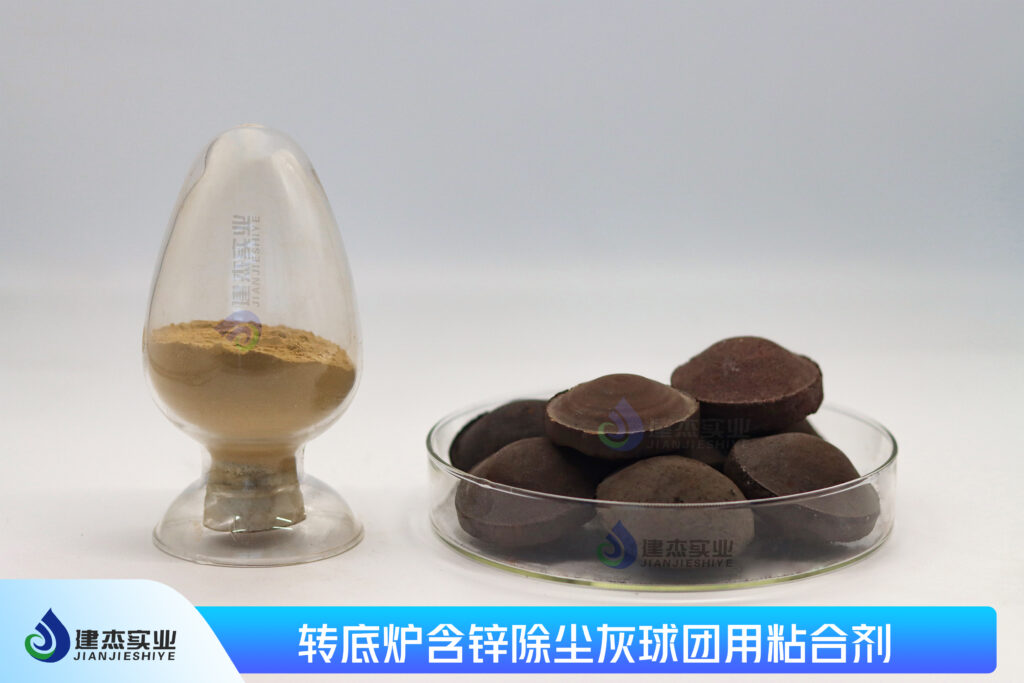
The RHF direct reduction process involves steps such as adding binders to solid waste dust, briquetting/pelletizing, drying the green pellets, reduction inside the RHF, and cooling the reduced product. During production, dust/sludge pellets often suffer from poor post-drying strength and high degradation rates. To improve the pelletizing rate, increase pellet strength, and minimize fines, binders must be introduced.
By thoroughly mixing a small amount of Jianjie Binder with steel plant solid wastes (such as dust and sludge), the binder activates upon contact with water. Through wetting, penetration, and dry-curing, it exerts high cohesive forces that tightly bind the solid waste particles together. Furthermore, the binder contains anti-calcium oxide components. These components react with the calcium oxide present in zinc-bearing dust, allowing the formed pellets to resist cracking, disintegration, and pulverization caused by residual calcium oxide. The cold-pressed pellets achieve high molding rates and excellent green/dry strength, ensuring sufficient impact, compressive, and abrasion resistance to withstand shattering during production, transit, and handling.
Product Introduction
Jianjie’s Specialized Binder for Zinc-Bearing Dust is a composite binder made primarily from organic matter, blended with tackifiers, reinforcers, and modifiers through a sequence of proprietary processes. It features highly cohesive components and anti-calcium oxide traits, offering low dosage requirements, strong binding forces, high molding rates, and excellent strength.
Scope of Application
Suitable for steel plant zinc-bearing dust, including blast furnace dry-process dust, sintering electrostatic precipitator dust, etc.
Product Features
High Specialization: Custom-designed for steel plant zinc-bearing dust. It delivers high viscosity, high pellet molding rates, excellent cold strength, and high-temperature resistance, drastically lowering pellet degradation to meet RHF zinc-removal demands.
Easy to Use: Simply blend the binder with the zinc-bearing dust in the correct proportion, add water, mix thoroughly, and cold-press into shape.
Cost Reduction: Low addition dosage coupled with intense binding strength allows for a simple cold-press process, requiring minimal equipment investment and reducing overall production costs.
Outstanding Performance: One ton of binder can produce 25–50 tons of zinc-bearing dust pellets. It yields a molding rate of 98%, survives a 0.5-meter drop test 5 times without breaking, and achieves a dry cold compressive strength above 400N. It exhibits zero cracking, disintegration, or pulverization, keeping the pellet return rate below 30% and the fines degradation rate below 25%.
Got questions?
Contact Jianjie now for more information.
1. Basic Definition
Direct Reduced Iron (DRI, also known as sponge iron) technology is an ironmaking method where iron ore is reduced into solid metallic iron using gaseous or solid reducing agents at temperatures below the melting point of the ore (typically around 800–1000°C). The final product retains a highly porous structure, hence the nickname “sponge iron.”
Difference from the traditional long-process:
Traditional: Ore → Hot Metal/Pig Iron (Liquid, High Carbon) → Converter Steelmaking
Direct Reduction: Ore → Solid Metallic Iron (DRI) → Electric Arc Furnace (EAF) Steelmaking
2. Core Principle
In a solid-state environment, H2 or CO is used to strip oxygen away from iron ores (Fe2O3 / Fe3O4):
Fe2O3 → Fe3O4 → FeO → Fe (Metallic Iron)
Because the reaction temperature does not reach the melting point, the iron remains solid, developing a porous, sponge-like structure with a metallization rate ≥ 90%.
3. Typical Application Scenarios
EAF Steelmaking Feedstock: DRI + scrap steel are charged into electric arc furnaces to produce commercial steel, high-quality steel, or stainless steel.
Specialty Steel Manufacturing: High-purity DRI is used to manufacture high-end bearing steel, electrical steel, and military-grade steel.
Solid Waste Resource Recovery: Coal-based rotary hearth furnaces process baghouse dust, steel slag, and red mud to recover metallic iron.
Core Path to Green Steel: The combination of “Hydrogen-based DRI + Zero-Carbon EAF” serves as a premier low-carbon blueprint under global carbon neutrality goals.
References
Pang Jianming, Guo Peimin, Zhao Pei. Analysis of Coal-Based Direct Reduction Ironmaking Technology [J]. Angang Technology, 2011, (3):1-7.
Zhou Qiang. New Technologies in Direct Reduction [J]. Sintering and Pelletizing, 1999, 24(1): 24—28.
Zhou Yusheng. Review on the Development Progress of New Coal-Based Smelting Reduction Ironmaking Processes [J]. World Iron and Steel, 2005, 5(1): 1-9.
Chen Maoxi. Review on the “One-Step” and “Two-Step” Rotary Kiln Direct Reduction Processes [J]. Ironmaking, 1991, 10(4): 46—53.
Xu Keke, Jiang Tao. Utilizing Coke Oven Gas to Produce Direct Reduced Iron is the Most Viable Hydrogen Metallurgy Path for China at the Present Stage [N]. China Metallurgical News, 2023-11-14(002). DOI: 10.28153/n.cnki.ncyjb.2023.002379.