
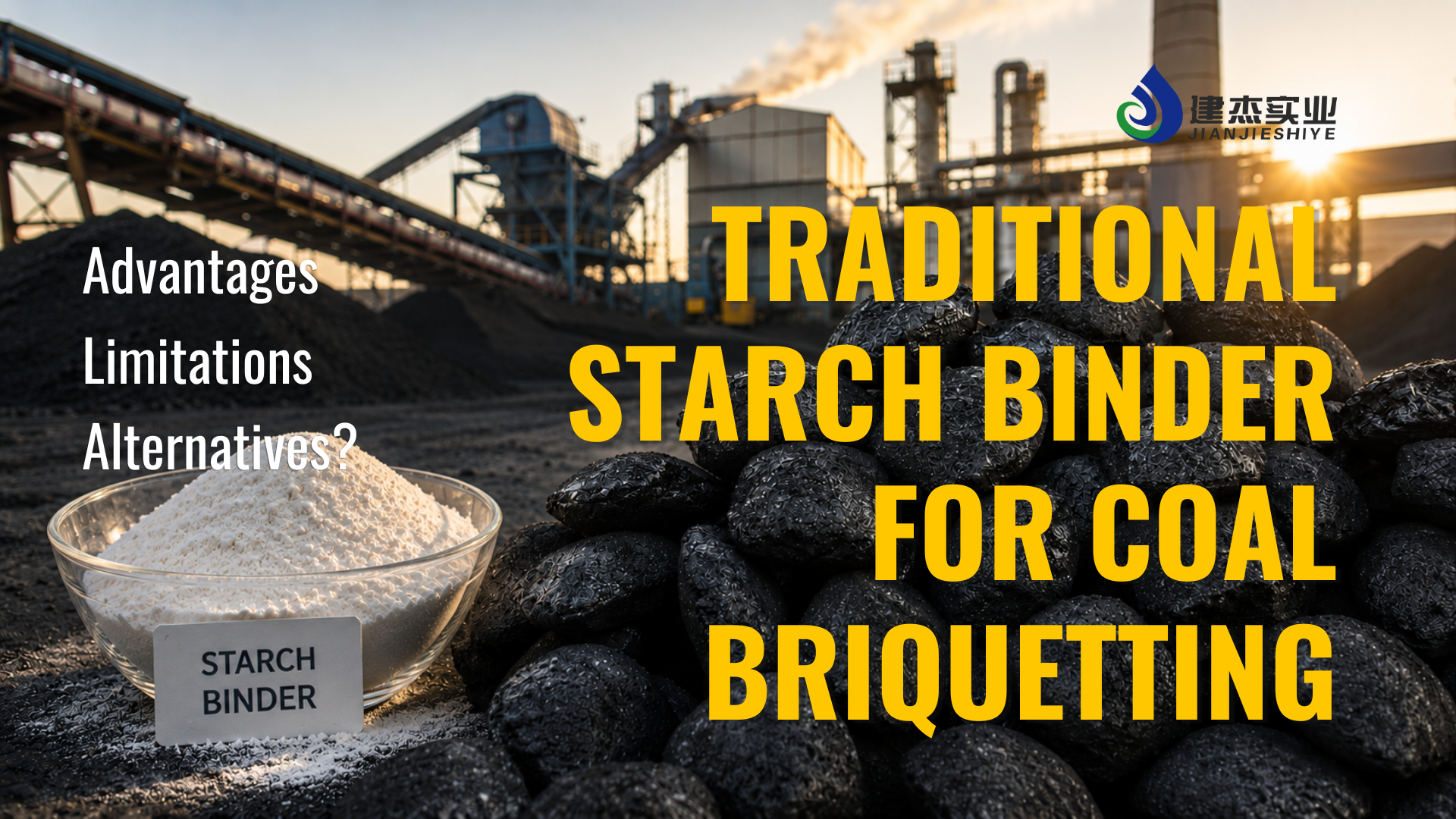
Coal briquetting plays an important role in improving fuel utilization, reducing dust, and recycling fine coal. One of the most widely used traditional 바인더 in this process is starch binder, thanks to its natural origin, wide availability, and relatively low cost.
However, as production scales increase and quality requirements become more demanding, many manufacturers find that starch alone cannot consistently deliver the strength and process stability needed for modern briquetting lines.
In this article, we’ll explain how starch binders work, their common limitations, and why many producers are moving toward engineered composite binder systems.
What Is a Traditional Starch Binder?
A traditional starch binder is a natural polysaccharide-based adhesive derived from materials such as corn, cassava, or potato starch.
During production, starch is mixed with water and heated until it gelatinizes, forming a sticky gel that binds coal particles together. After briquetting, the briquettes must dry before reaching their final strength.
Because starch is renewable and relatively inexpensive, it has remained a popular choice for coal briquetting for many years.
Key Limitations of Traditional Starch Binder
Although starch works well in some applications, it also has several drawbacks that can affect production efficiency and briquette quality.
1. Poor Moisture Resistance
Starch is naturally hydrophilic, meaning it easily absorbs water.
After drying, briquettes made with starch can soften or lose strength when exposed to humidity, rain, or wet storage conditions. This increases the risk of breakage during transportation and outdoor storage.
2. Slow Drying and Low Early Strength
Starch binders require a relatively large amount of water during gelatinization.
As a result, briquettes often need longer drying times before they develop sufficient strength, slowing production and increasing energy consumption.
3. Brittleness After Drying
Once fully dried, pure starch can become rigid and brittle.
This makes briquettes easier to cracking or chipping during handling, stacking, and transportation.
4. Aging During Storage
Over time, starch molecules gradually reorganize in a process known as retrogradation.
This can lead to:
- Water separation
- Reduced viscosity
- Declining bonding performance
As a result, binder quality may become inconsistent after storage.
5. Sensitive Processing Conditions
The viscosity of starch slurry changes easily with temperature, mixing speed, and mixing time.
These fluctuations can make binder application less consistent and affect briquette quality, especially in continuous industrial production.
Why These Limitations Matter
Each of these issues can reduce production efficiency, increase briquette breakage, 그리고 make product quality less consistent.
For plants producing large volumes of coal briquettes, even small variations in binder performance can result in higher return fines, additional processing costs, and reduced productivity.
As production requirements continue to rise, many manufacturers are looking for binder that provide more stable performance while simplifying the briquetting process.
An Alternative Choice: Jianjie Composite Binder
Rather than relying on starch alone, 젠지에 그룹 has developed proprietary composite binders specifically for industrial coal briquetting.
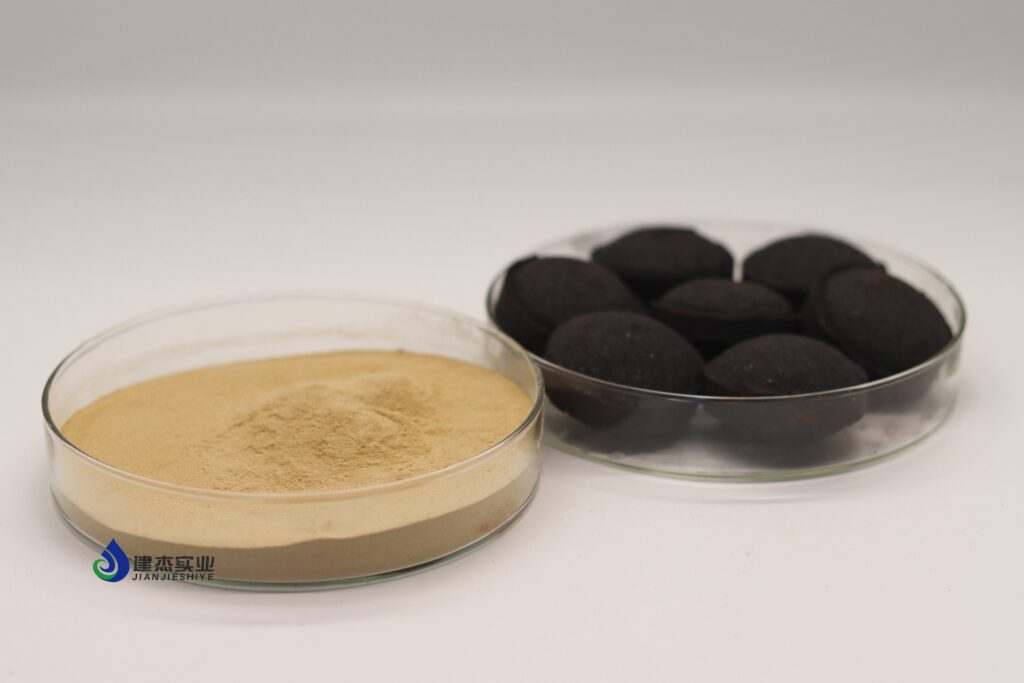
Our binder combines multiple functional components to improve overall performance while reducing the weaknesses associated with traditional starch systems.
Key benefits include:
- Higher green, dry, and cold compressive strength
- Better moisture resistance during storage and transportation
- Lower binder dosage (3-5%, or even less at requirements) compared with conventional solutions
- Faster and more stable production
- Customized formulations based on different coal types and production requirements
More importantly, Jianjie doesn’t just supply binders—we provide technical support, laboratory testing, formulation optimization, and on-site production guidance to help customers achieve stable, long-term results.
Conclusion
Traditional starch binders remain a practical option for some coal briquetting applications, but they often struggle to meet the demands of modern industrial production. Poor moisture resistance, slow drying, brittle briquettes, and unstable processing can all impact productivity and product quality.
For manufacturers seeking stronger briquettes and more reliable production, an engineered composite binder offers a more effective long-term solution.
Looking for the right binder for your coal briquetting process? 연락하다 Jianjie Group to discuss your raw materials and production requirements. Our team can recommend a customized binder solution that helps improve briquette quality while reducing production costs.

답글 남기기