
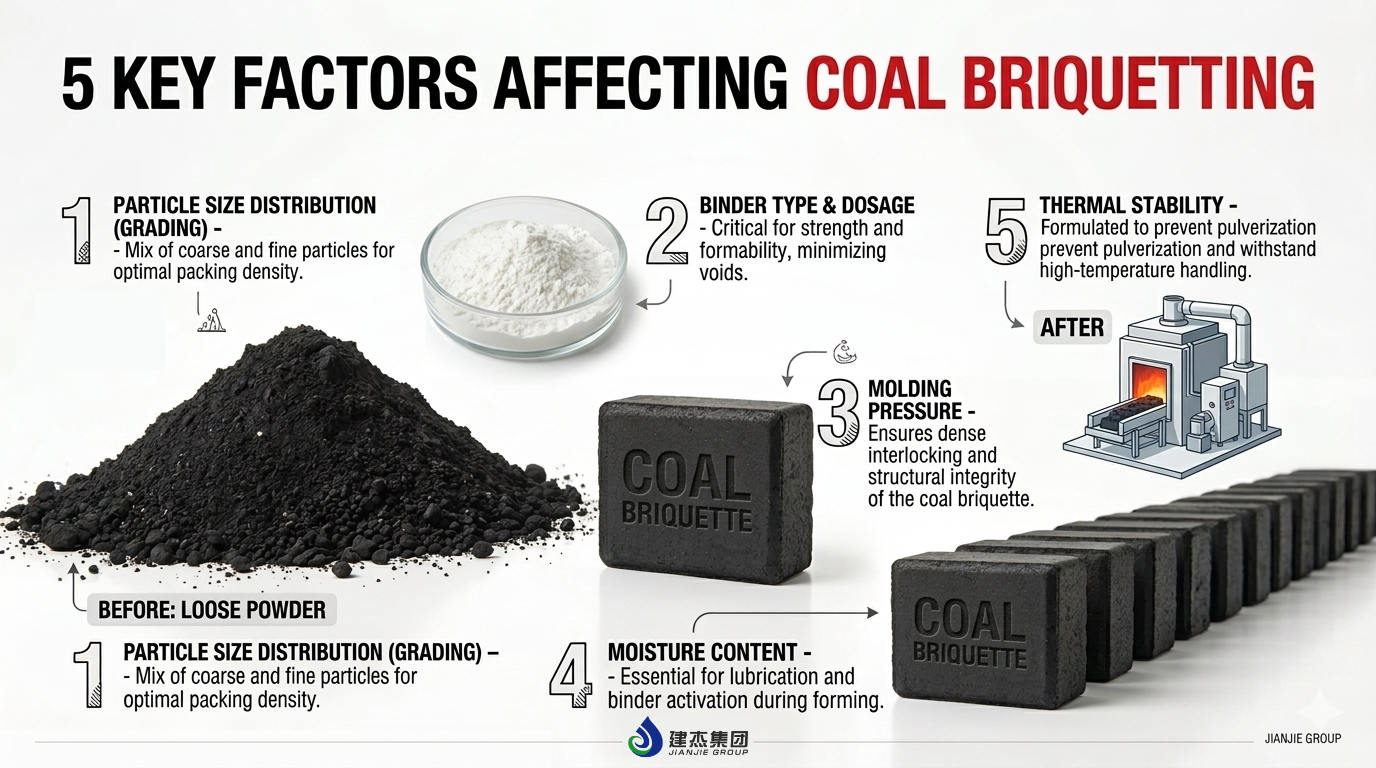
Coal briquetting is an important technology used to convert fine coal powder into solid coal briquettes that are easier to transport, store, and use. In industries such as metallurgy, chemical processing, and energy production, the coal briquetting process helps improve fuel efficiency while reducing dust pollution and material waste.
Typically, coal fines are compressed in a briquetting machine together with a suitable binder to form dense briquettes with stable shapes. However, many manufacturers experience problems such as weak briquette strength, cracking during drying, or excessive powder return.
In most cases, these issues are not caused by a single factor but by several process variables working together. Understanding the key factors affecting coal briquetting can help manufacturers optimize production and produce stronger, more durable coal briquettes.
What Are the Key Factors Affecting Coal Briquetting?
The main factors affecting coal briquetting include coal particle size distribution, moisture content, binder selection, briquetting pressure, and drying conditions. When these parameters are properly controlled, manufacturers can produce high-strength coal briquettes with consistent density and durability. Optimizing these factors is essential for stable operation in any coal briquetting plant.
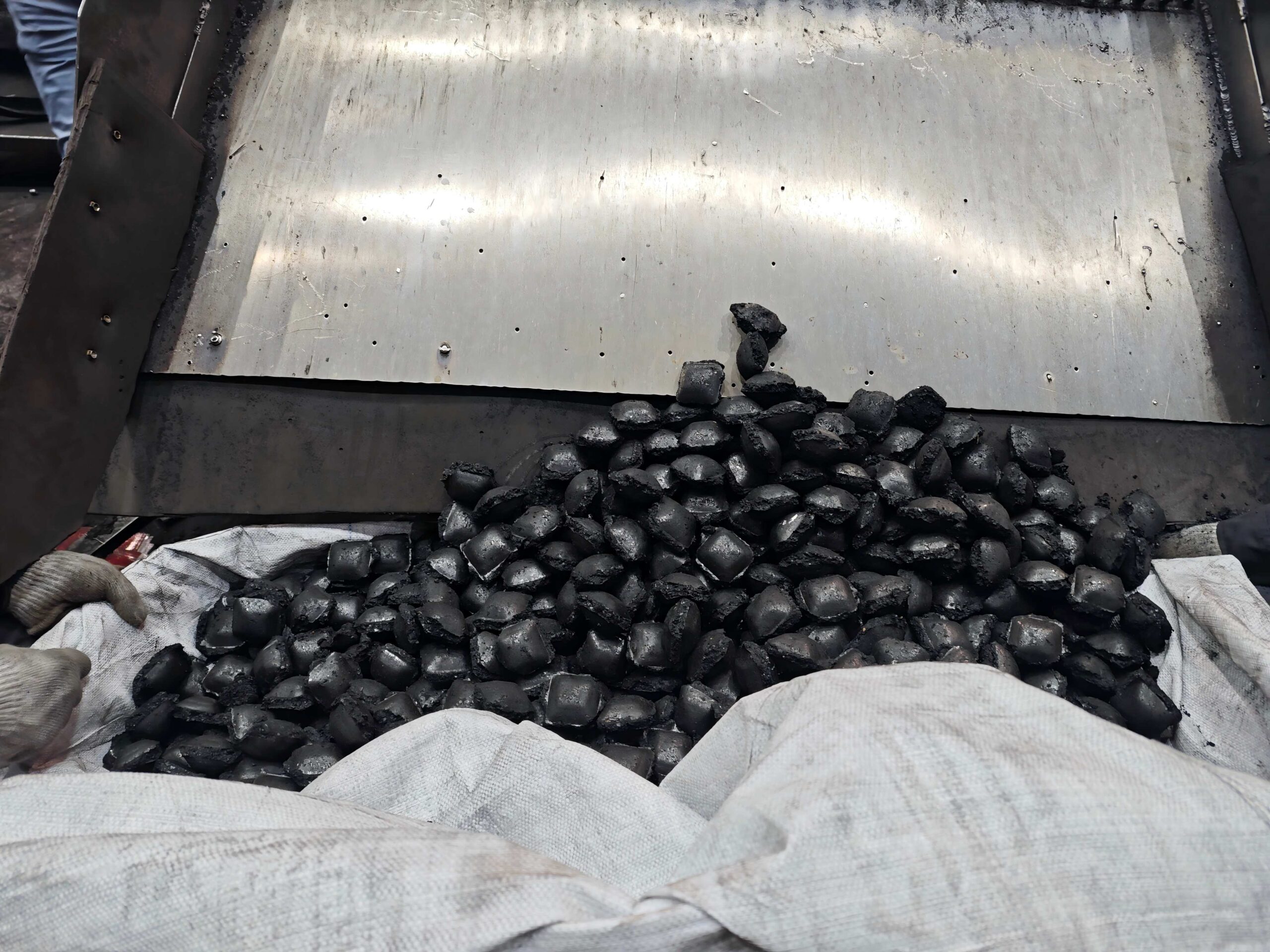
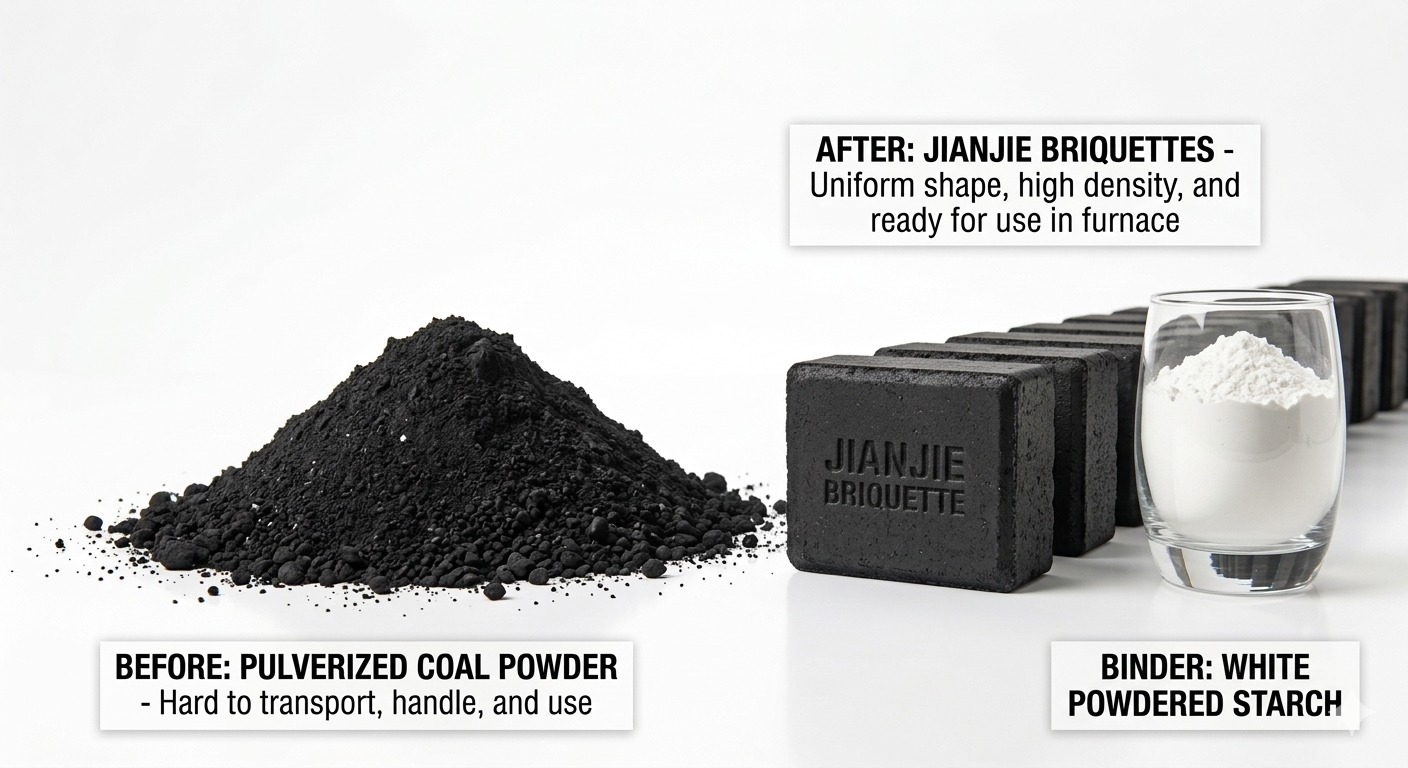
Coal briquettes using Jianjie binder
1. Moisture Content of Your Raw Materials
Moisture is another critical factor influencing the coal briquetting process.
If the moisture content is too low, coal particles cannot form effective bonding bridges during compression. This results in fragile coal briquettes that break easily during handling.
However, if moisture is too high, the material may become sticky and difficult to feed into the briquette press machine. Excess water can also cause cracks during the drying stage.
For most briquetting operations, the optimal moisture range is typically:
7% – 13%
Maintaining proper moisture levels improves material flow, enhances particle bonding, and increases the final strength of the briquettes.
2. Optimal Molding Pressure and Crushing Force
The performance of the брикетировочная машина also plays a major role in determining briquette quality.
A briquette press machine applies high pressure to compress coal powder into dense briquettes. Higher pressure generally improves particle bonding and increases briquette strength.
However, excessively high pressure may increase energy consumption and equipment wear without significantly improving briquette quality.
Key equipment factors include:
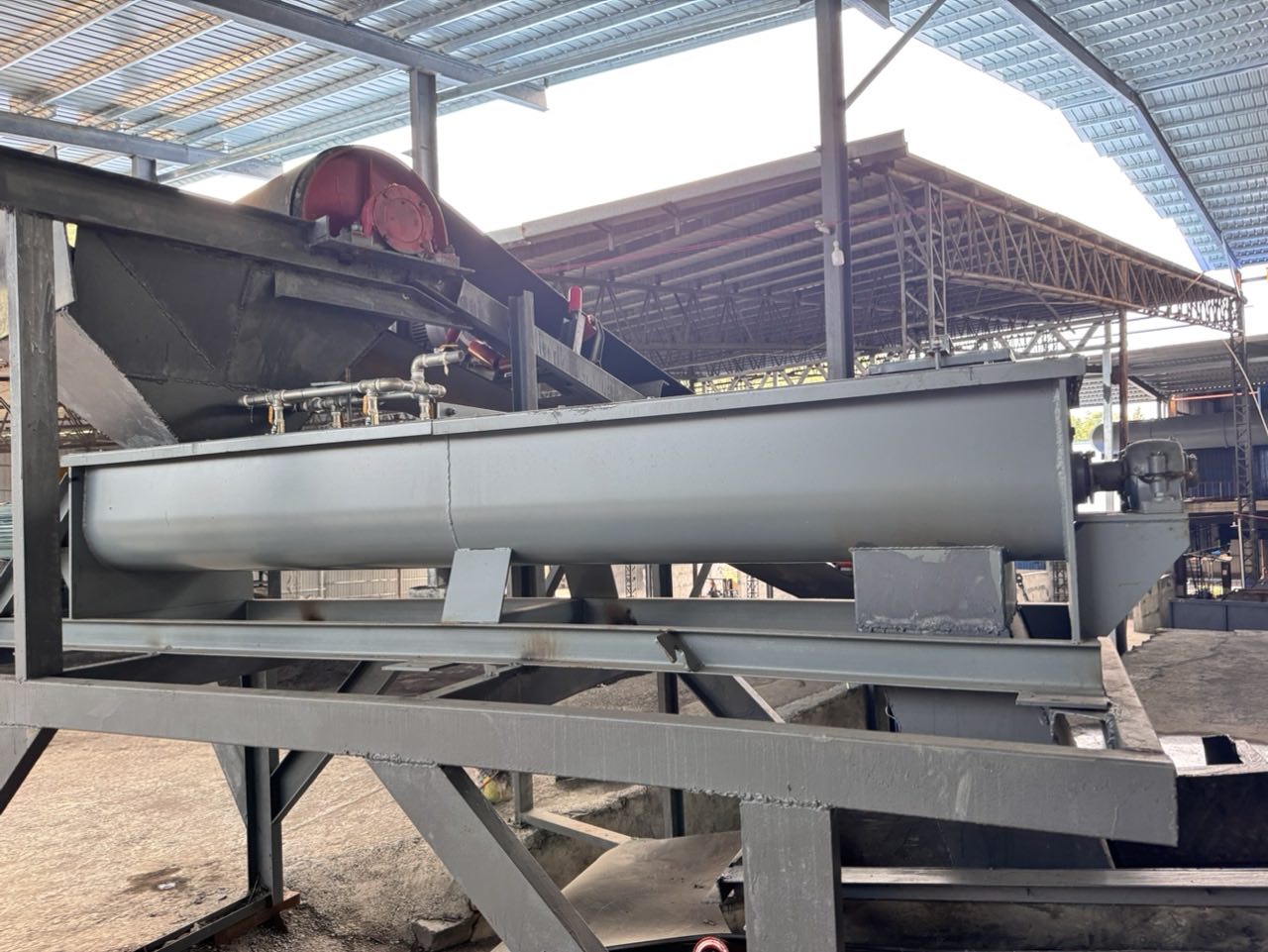
Mixer
A well-designed coal briquetting machine ensures that materials are evenly distributed and compressed consistently, resulting in stable briquette quality.
3. Particle Size Distribution (Grading)
One of the most important factors in the coal briquetting process is the particle size distribution of the coal powder.
If coal particles are too large, they cannot pack tightly during compression, leading to low density and weak briquettes. On the other hand, if the powder is too fine, it may increase binder consumption and reduce air permeability during drying.
An ideal particle size distribution contains both fine and medium particles. The smaller particles fill the gaps between larger ones, forming a compact internal structure during compression in the briquetting machine.
In most industrial coal briquetting plants, the recommended particle size range is:
Proper crushing and screening before briquetting are essential for achieving stable briquette quality.
4 Drying and Post-Processing Conditions
After the briquetting stage, drying becomes an important step in the coal briquette production process.
During drying, moisture is removed and the binder system develops stronger bonding structures between coal particles. Proper drying ensures that угольные брикеты maintain their strength during transportation and storage.
If the drying temperature is too high, rapid evaporation may cause internal cracks. If drying is insufficient, the briquettes may remain soft and unstable.
Key drying considerations include:
Carefully controlled drying conditions help ensure the final strength and durability of the briquettes.
5. Binder Dosage and Selection
Coal powder generally has limited natural bonding ability, which is why a binder for coal briquettes is often required.
A suitable binder helps create bonding bridges between coal particles during compression, significantly improving:
Several types of binders are commonly used in брикетирование угля, в том числе:
Selecting the right binder for coal briquetting depends on the properties of the raw coal, production conditions, and the final application of the briquettes.
Companies like Группа Цзяньцзе specialize in developing customized binder systems that match different raw materials and briquetting conditions. Proper binder selection is often the key to achieving durable угольные брикеты with high mechanical strength.
Why Choose Jianjie Coal Binders?
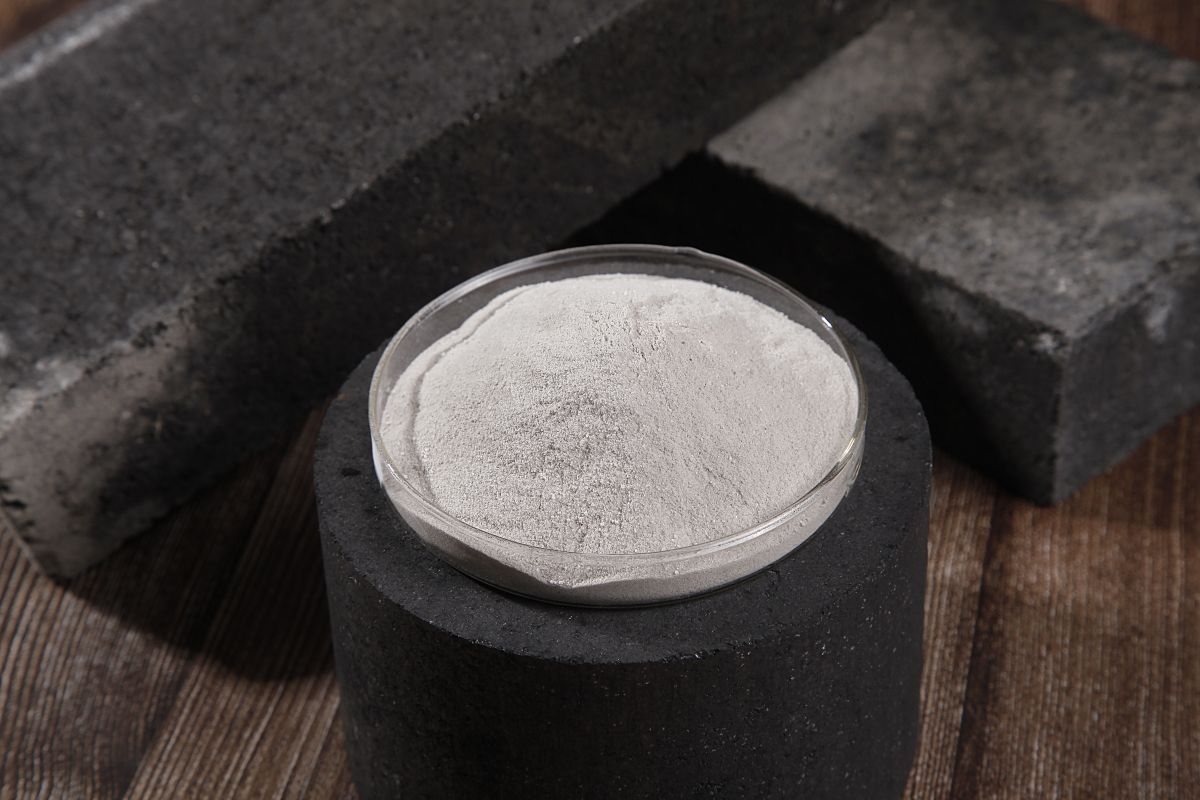
Jianjie Binder for Anthracite Coal
Jianjie Group specializes in high-performance binder tailored for the demanding environments of the metallurgy and recycling sectors. Our coal binder solutions offer three distinct technical advantages:
Superior Cohesive Force: Наш сайт coal briquetting binder creates a high-strength matrix that withstands the mechanical stresses of transport and charging.
Thermal Stability: Unlike standard adhesives, a coal briquette using Jianjie binder will sustain high pressure and not pulverize or decrepitate when exposed to the extreme temperatures of a blast furnace.
High Reactivity & Adsorption: Optimized for rapid bonding with pulverized coal, ensuring high throughput in cold-press molding lines.Industrial Applicati
Looking to Improve Your Coal Briquetting Process?
If your production line is facing challenges such as low briquette strength, excessive powder return, or unstable briquetting performance, the issue may lie in the binder system or process parameters.
Jianjie Group specializes in binder technology and integrated briquetting solutions for coal, steel mill waste, mineral powders, and other industrial materials. Our team provides:
Whether you are building a new coal briquetting plant or optimizing an existing брикетировочная машина, Jianjie can help you improve briquette strength and production efficiency.
👉 Contact our team to start a briquetting test for your raw materials.
FAQ about Coal Briquetting and Coal Binder
Coal briquetting is a process that compresses coal powder or coal fines into solid угольные брикеты using a брикетировочная машина and a binder. This process improves fuel efficiency, reduces dust pollution, and allows easier transportation and storage.
A binder for coal briquettes helps create bonding bridges between coal particles during compression. Without a binder, briquettes may not maintain their shape or strength after leaving the briquette press machine.
In most coal briquetting processes, the optimal moisture content ranges between 8% and 12%, depending on the coal type and binder system used.
The main equipment used in coal briquetting plants is a briquette press machine или брикетировочная машина, which compresses coal powder into shaped briquettes using high pressure and specially designed rollers.
To improve coal briquette strength, manufacturers should optimize:
A well-optimized coal briquetting process can significantly reduce breakage and improve briquette durability.

-scaled.jpg)

 Russian
  English
  Arabic
  Chinese
  Indonesian