For many briquetting plants, choosing a low-cost binder seems like the most economical decision. Materials such as molasses or traditional low-grade binding agents appear affordable and easy to source.
However, inside the production line, the story is often very different.
Unstable briquettes, excessive fines, repeated maintenance, and high rates of powder to be returned for re-pressing quietly consume time, labor, and money every single day. What initially looked “cheap” gradually becomes one of the most expensive parts of the entire 压块过程.
For engineers and procurement managers dealing with constant production headaches, this situation is all too familiar.
The question is no longer: “How much does the binder cost?”
The real question is: “How much does poor briquetting performance cost your factory?”
In this article, we will go through the problems unmatched or “cheap” binders might bring.
Why “Cheap” Binders Often Become Expensive
Many factories evaluate binders based only on purchase price per ton. However, binder cost alone never tells the full story.
In reality, the total production cost of briquetting depends on multiple factors:
- Binder dosage (too much or too little will lead to unwanted results)
- Briquette strength (easily to break during handling and production)
- Production stability (always interrupted production because of stucked equipment, or need to be cleaned after one round of production)
- Equipment condition (failed-to-maintained equipments will affect the production)
- Rework rate (having failed-to-cold-pressed fines briquetted again in the whole process)
- Transportation losses (briquettes break or crack during transporting)
- Labor and maintenance (leading to low-efficient working and spend more time on maintaining the production line)
When these hidden costs are ignored, a “cheap” binder can quickly become a very expensive choice.
Problem #1: Higher Binder Dosage Means Higher Real Cost
Traditional binders like 大蒜 often require high addition ratios to achieve acceptable 煤球强度.
In many applications, dosage can reach:
- 7–15% for traditional binders
- 3–5% for optimized composite binders
This difference directly affects:
- More raw material consumption (higher usage of binder and moisture during production)
- Higher moisture content (extra water that makes drying more difficult)
- Lower production efficiency (reduced output and slower processing speed).
Higher binder usage can also increase drying difficulty and reduce line capacity.
So even if the binder price is lower, the total cost of briquetting may actually become higher.
Problem #2: Cheap Binders Can Create More Maintenance Problems
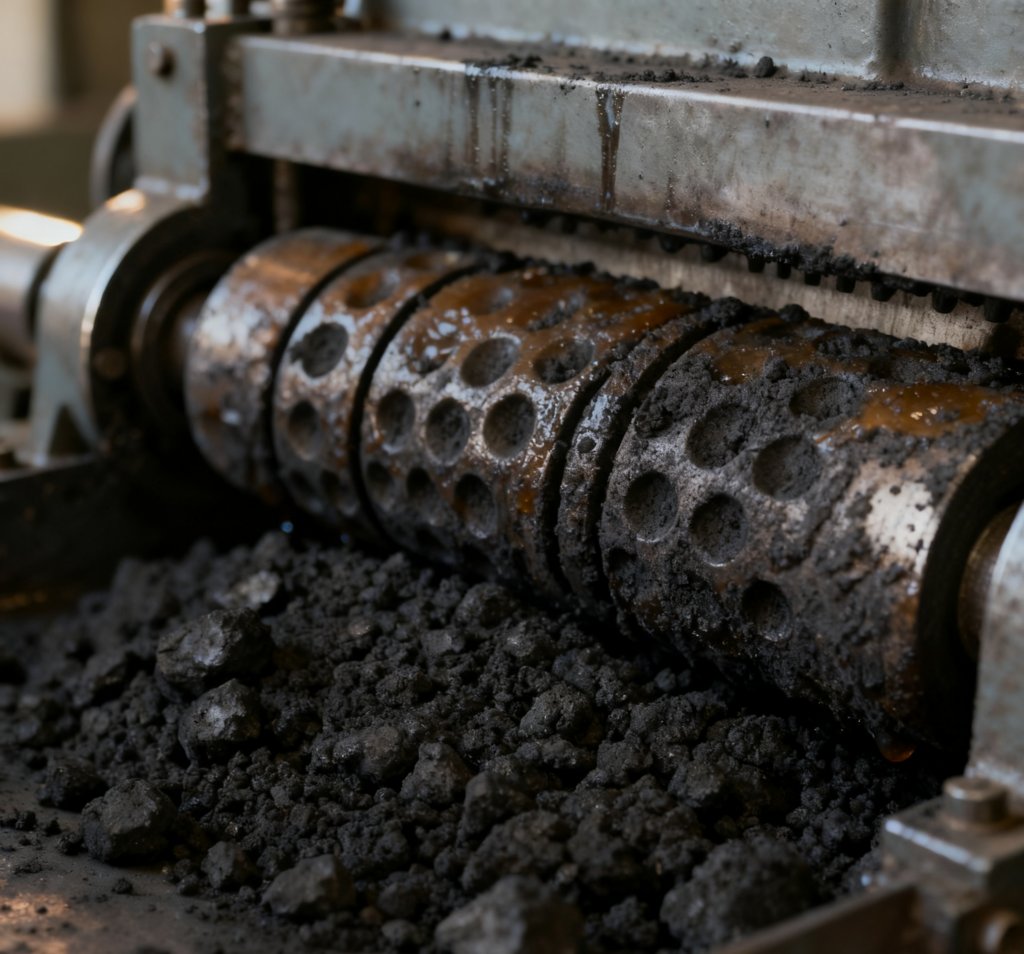
Low-cost binders may also create equipment problems during production.
Because unstable binders can become sticky under certain production conditions.
This can lead to:
- roller buildup (material accumulating on the roller surface during briquetting)
- Conveyor contamination (sticky residue attaching to conveyor belts and equipment)
- Material sticking (raw materials adhering to machine surfaces instead of forming properly)
- Frequent cleaning (more manual cleaning needed to keep the line running).
As a result:
- Production stops more often
- Labor costs increase
- Briquetting line becomes less stable
Many plants focus only on binder price, but ignore the maintenance costs behind it.
The binder may be cheap, but the downtime is expensive.
Problem #3: Weak Briquettes Create More Hidden Losses
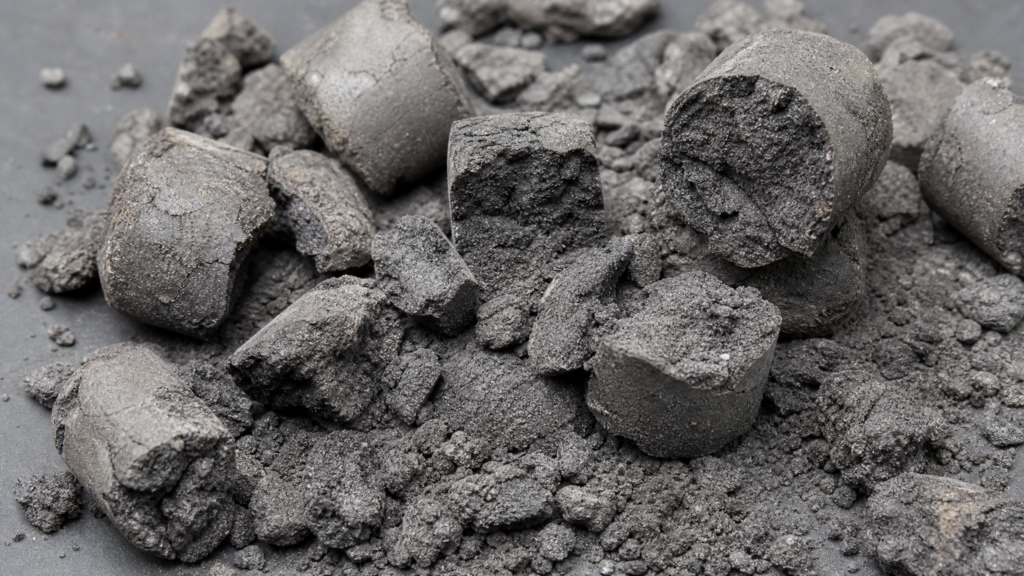
Low-strength briquettes can easily crack during transportation and handling.
This creates:
- More fines (small broken particles generated during transport)
- More return material (damaged briquettes returned to the production line)
- More waste (raw materials lost during handling and processing).
In steel plants, unstable briquettes may also affect furnace feeding efficiency and recycling performance.
That means:
- Lower metal recovery rates in the furnace (less effective recovery of valuable metal during smelting),
- Higher material loss (more waste generated during processing)
- Reduced production efficiency (unstable feeding affecting plant operations).
A binder that cannot maintain stable briquette strength often creates continuous hidden losses throughout the production process.
Problem #4 Unstable Briquetting Makes Production Harder to Control
Different raw materials require different briquetting solutions.
Steel waste like steel dust, mill scale, sludge, 煤粉 like coal, coke, biochar, and mineral powders like manganese ore all behave differently during briquetting.
If the binder does not match the material,
the briquettes may become:
- Too soft (unable to maintain shape after pressing)
- Too dry (poor bonding performance during forming)
- Difficult to form consistently (unstable briquette size and strength).
Operators then need to constantly adjust: moisture, pressure, and production parameters.
Over time, this increases troubleshooting costs and reduces operational stability.
For many factories, the biggest problem is not the binder itself —it is unstable production.
How Jianjie Helps Improve Briquetting Stability
在 Jianjie Group, we help steel plants and coal manufacturers improve production efficiency by improving briquette quality and overall briquetting stability.
We provide:
- briquetting binders,
- process optimization,
- laboratory testing,
- equipment matching,
- and on-site technical support.
Our team develops customized binder solutions based on:
- raw material characteristics,
- production conditions,
- strength requirements,
- and equipment configuration.
By improving briquette performance, Jianjie helps customers achieve:
- lower binder dosage (less binder needed during production),
- higher briquette strength (stronger briquettes during transport and furnace feeding),
- less maintenance and repair required (reduced equipment cleaning and downtime),
- higher production efficiency (more stable operation and smoother production flow),
- and less return work (fewer defective briquettes sent back for reprocessing).
The goal is not simply to reduce binder price.
The goal is to help customers reduce total production costs through more stable and efficient briquetting.
结论
Cheap binders may look economical at first.
But weak briquettes, unstable production, and frequent maintenance can quickly increase the real cost of briquetting.
In many cases, the hidden losses become much more expensive than the binder itself. That is why more factories are moving away from “cheap” solutions and focusing on stable production performance instead. In modern briquetting plants, stability is often the real way to reduce costs.
Talk to Our Technical Team
If your briquetting line is facing issues like unstable briquettes, high return rates, or frequent equipment cleaning, it may be time to review your current binder system and process setup.
At Jianjie Group, we provide binder solutions and full process support to help you improve briquetting stability and reduce total production cost.
👉 联系我们 to discuss your raw material and production challenges, and get a tailored briquetting solution for your plant.