Table of Contents
Indonesia has abundant coal resources, and coal fines and other fine particles are often generated during mining, screening, handling, and processing. Briquetting can convert these loose fines into a more manageable fuel or industrial material. However, because coal particles do not naturally bond strongly under pressure alone, a suitable coal briquette binder is often required.
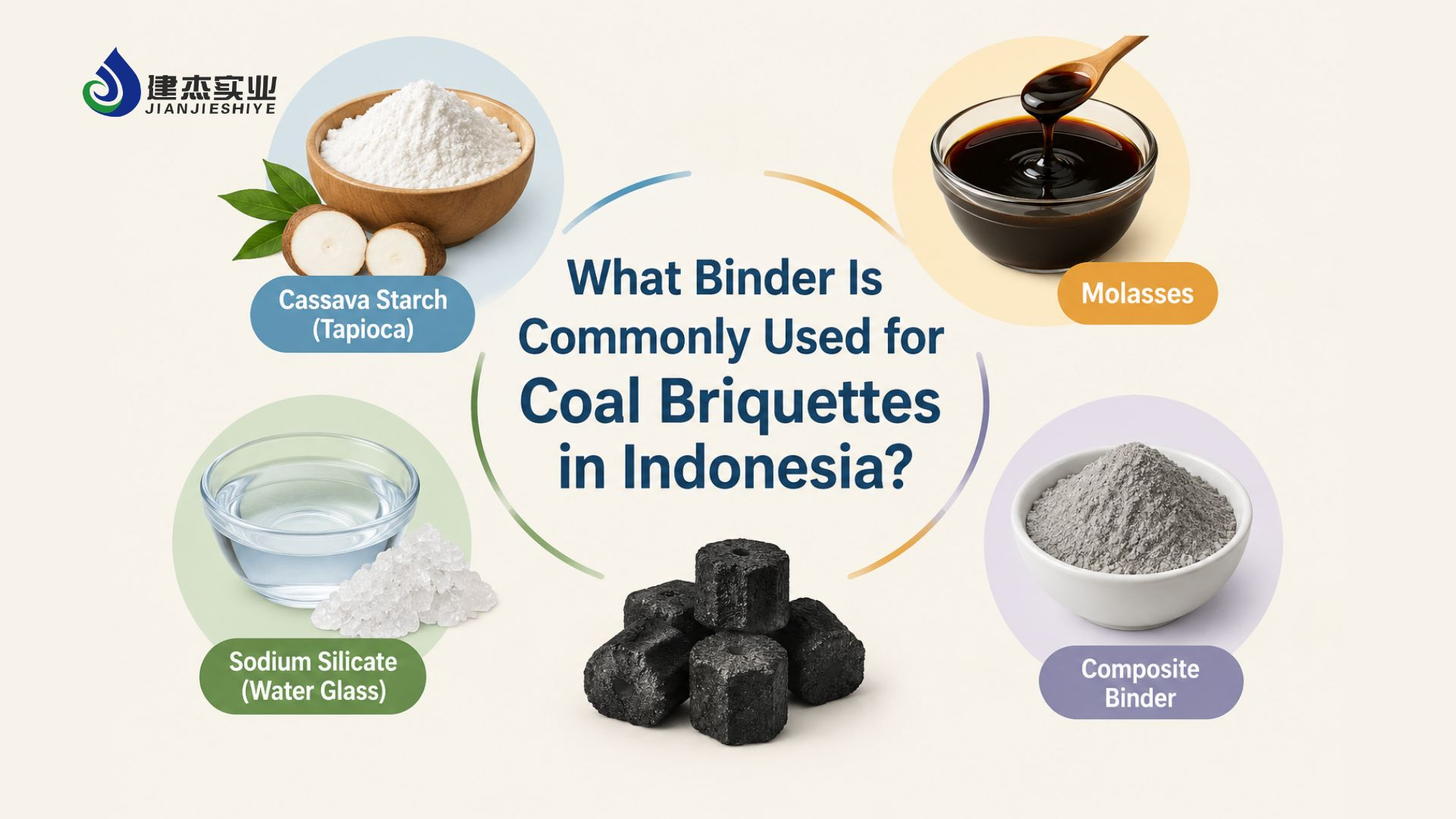
So, what binder is commonly used for coal briquettes in Indonesia?
There is no single binder suitable for every application. Common options include cassava starch (tapioca), molasses, sodium silicate (water glass), and composite binders. The right choice depends on the coal properties, briquetting process, required strength, and final application.
Let’s go through the binders together.
1. Cassava Starch (Tapioca)
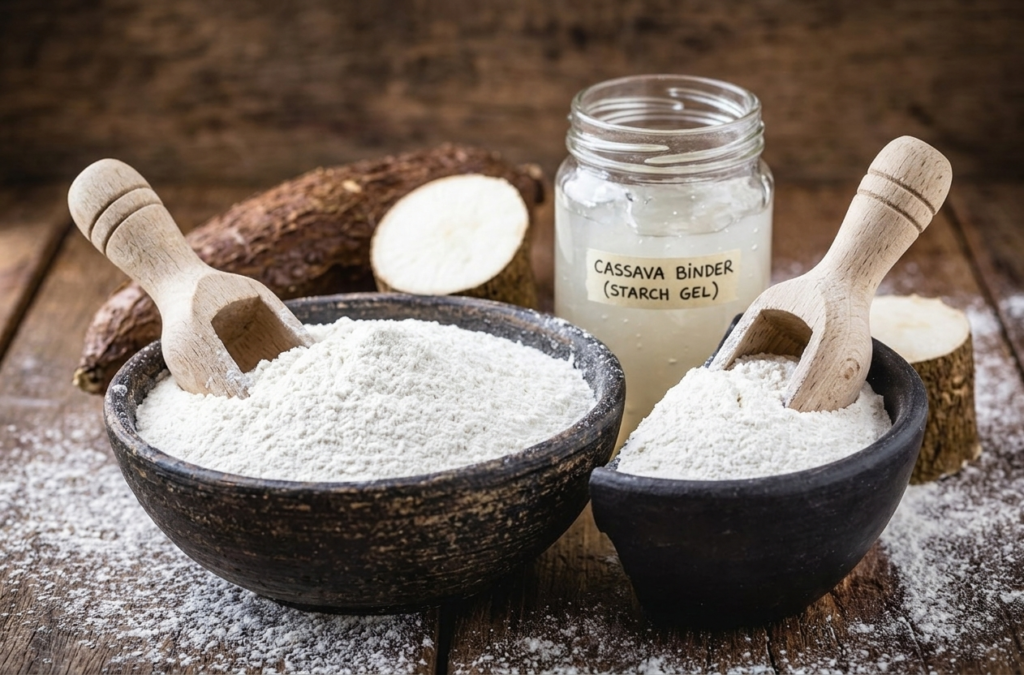
Cassava starch, commonly known as tapioca starch, is a familiar binder in Indonesia and is widely used in charcoal, biomass, and biocoal briquettes.
When mixed with water and properly prepared, starch develops adhesive properties that help coal particles bond together. It is an attractive option because it is relatively easy to obtain, combustible, and generally adds little inorganic ash to the briquette.
However, starch-based binders require appropriate control of moisture, mixing, and drying. If the formulation or preparation is not suitable for the coal, briquettes may have insufficient strength or become vulnerable to moisture.
Best suited for: producers looking for a relatively simple, combustible, and locally familiar binder.
2. Molasses
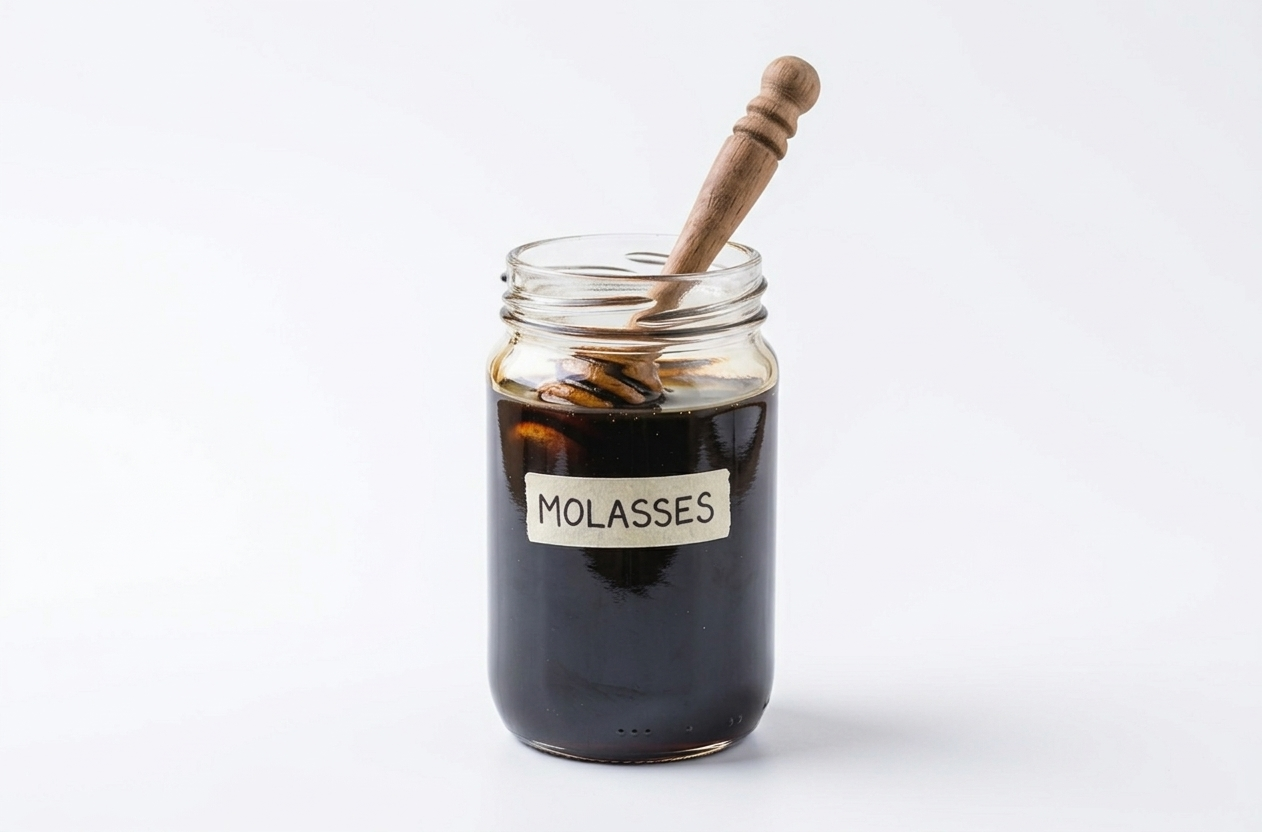
Molasses is another traditional organic binder used in coal briquetting. Its natural stickiness helps coal particles adhere during forming and can improve the initial strength of briquettes.
Molasses can be attractive when it is readily available locally. However, its performance can be affected by moisture and drying conditions. Producers also need to consider handling characteristics, storage stability, and whether the binder is suitable for their specific production process.
Therefore, while molasses can work well in some applications, the lowest purchase price does not necessarily mean the lowest overall production cost. Binder consumption, drying requirements, rejected briquettes, and transportation losses should also be considered.
Best suited for: applications where molasses is readily available and its processing characteristics fit the production line.
3. Sodium Silicate (Water Glass)

Sodium silicate, commonly called water glass, is an inorganic binder used in various briquetting applications. It can provide relatively strong dry bonding and good thermal stability.
These properties can make sodium silicate attractive for industrial applications where briquettes need to withstand subsequent handling or higher temperatures.
However, sodium silicate also has limitations. Drying conditions can influence its performance, and because it is an inorganic binder, its contribution to ash and mineral content should be considered when the briquettes are intended for combustion or metallurgical applications.
Best suited for: applications requiring strong dry bonding and good thermal resistance where inorganic binder components are acceptable.
4. Composite Binders
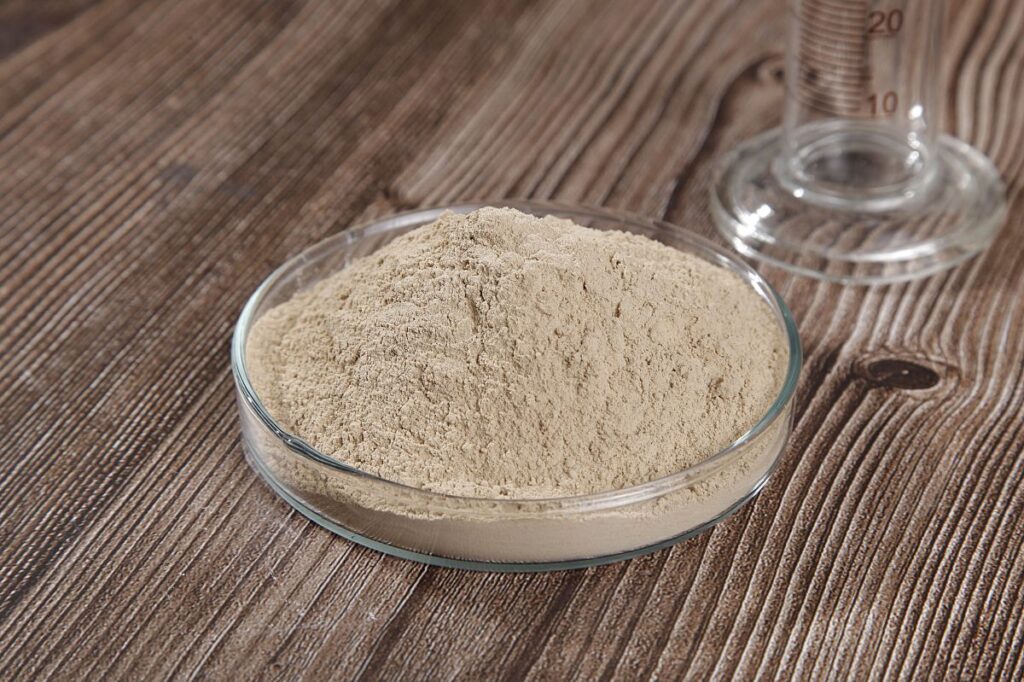
Composite binders take a different approach by combining different binding mechanisms or components. Instead of relying on one material to provide every required property, a formulated binder can be designed to balance green strength, dry strength, thermal performance, moisture resistance, and process adaptability.
This can be particularly useful for industrial coal briquetting because coal properties vary significantly. Particle size, moisture, coal rank, forming pressure, and equipment conditions can all affect briquette quality.
A binder that works well for one coal may not perform equally well for another. Composite formulations therefore provide greater flexibility when producers need to optimize the complete briquetting process.
How Do These Coal Briquette Binders Compare?
| Aglutinante | Main Advantages | Main Limitations |
| Cassava starch | Combustible, familiar in Indonesia, relatively easy to obtain | Sensitive to moisture and preparation |
| Molasses | Good adhesion, traditional organic binder | Drying and moisture-related considerations |
| Sodium silicate | Strong dry bonding, good thermal stability | Adds inorganic components; drying is important |
| Composite binder | Can balance multiple performance requirements | Requires formulation and application testing |
Which Binder Is Best for Coal Briquettes in Indonesia?
There is no universally best coal briquette binder. The correct choice should be based on the actual raw material and production requirements.
Before selecting a binder, producers should consider:
Coal type: anthracite, bituminous coal, lignite, or other coal grades
Particle size: especially the proportion of fine particles
Moisture content: both raw material and final briquette requirements
Briquetting equipment: roller press, hydraulic press, or other forming systems
Final application: industrial fuel, heating fuel, furnace charging, or other uses
Required strength: resistance to handling, transportation, storage, and thermal conditions
For industrial production, laboratory or pilot testing is recommended before selecting a binder for full-scale operation.
Why Consider Jianjie Composite Binder for Your Coal?
For producers looking for an alternative to conventional single-component binders, Carpeta compuesta Jianjie is designed for industrial coal briquetting applications.
Depending on the coal and application, Jianjie’s coal briquette binder can typically be used at an addition rate of approximately 1–4%. Its formulation is designed to improve briquette strength and stability while reducing breakage and fines during handling and transportation.
The binder can be applied to different coal materials, including anthracite, bituminous coal, lignite, coal fines, and coke breeze. More importantly, the formulation can be adjusted according to factors such as raw material characteristics, moisture, particle size, briquetting equipment, and required briquette strength.
This makes the approach different from simply selecting the cheapest available binder. Instead, the objective is to match the binder formulation with the complete production process.
Contact Jianjie now for costomized binder solutions and free sample for testing! Or leave your message below:
Frequently Asked Questions
Cassava starch (tapioca) is a familiar binder in Indonesian charcoal and biocoal briquette production. Molasses, sodium silicate, and composite binders are also used for different coal briquetting applications.
Yes. Tapioca starch can provide effective bonding and is combustible. However, moisture, mixing, drying, coal properties, and binder dosage need to be properly controlled.
Yes. Molasses can improve bonding and handling strength, but its moisture and drying characteristics should be evaluated for the specific production process.
Yes. Sodium silicate can provide strong dry bonding and thermal stability, but its inorganic composition should be considered according to the final application.
The best binder depends on the coal, particle size, moisture, equipment, required strength, and end use. For demanding industrial applications, testing different formulations under actual production conditions is the most reliable approach.

Deja una respuesta