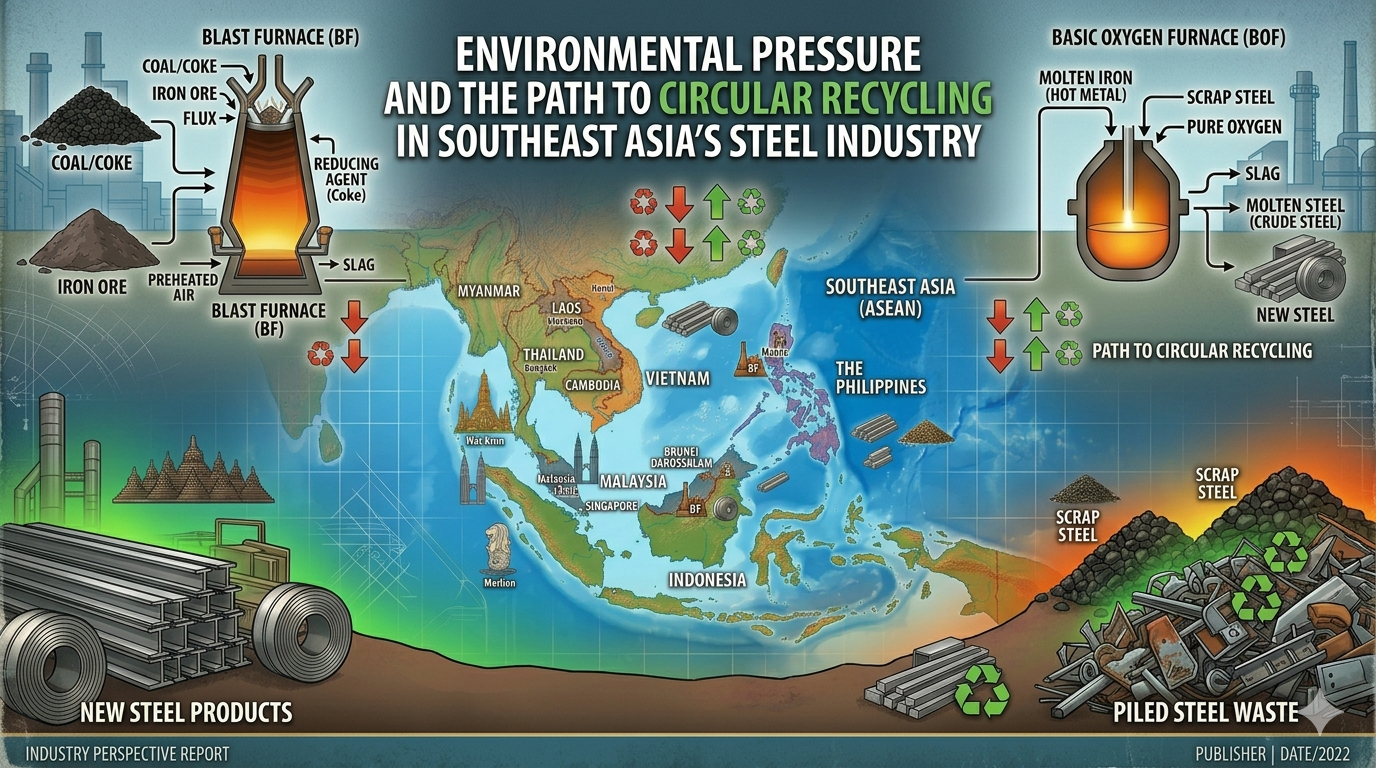
The steel industry in Southeast Asia (ASEAN) is standing at a critical crossroads. On one hand, rapid infrastructure development and construction demand have driven significant growth in crude steel production over the past decade. On the other hand, this expansion comes with mounting environmental costs and increasingly severe solid waste management challenges.
1. Dual Environmental Pressures Facing ASEAN Steel
Carbon-Intensive Expansion and Emissions Surge
The region is undergoing a structural shift—from a relatively “green” Electric Arc Furnace (EAF)-dominated model to a more carbon-intensive Blast Furnace–Basic Oxygen Furnace (BF-BOF) system.
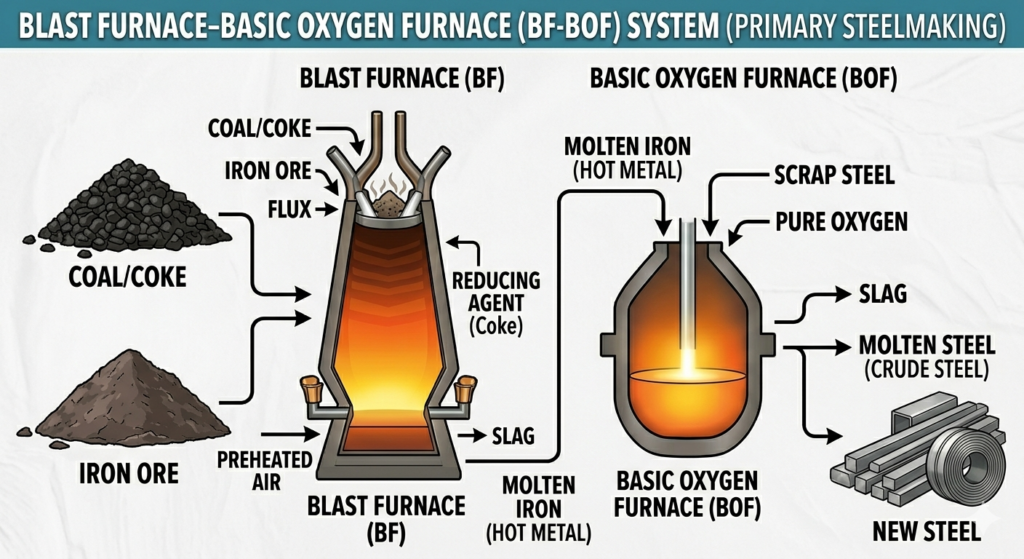
This transition is driving a sharp increase in emissions. By 2035, it is projected that 81% of ASEAN’s steel capacity will rely on high-emission blast furnace systems.
Taking Indonesia as an example, if current trends continue, emissions from its steel sector could increase by 11.7 times by 2060, accounting for 31% of the country’s total emissions.
External Pressure: CBAM Reshaping Trade Competitiveness
The European Union’s Carbon Border Adjustment Mechanism (CBAM) has become a defining constraint for ASEAN exporters.
Countries such as Vietnam, Indonesia, Thailand, and Malaysia—heavily reliant on EU markets—face significant exposure. Estimates suggest that Vietnam alone could see annual losses of up to USD 830 million in steel exports due to CBAM, while Indonesia and Thailand may also face substantial revenue impacts.
CBAM is no longer just a policy—it is a market access requirement.
Local Regulations and Public Health Concerns
Steel production emissions, including PM2.5 and sulfur dioxide (SO₂), are increasingly linked to public health issues.
In major industrial zones in Indonesia, rising respiratory illness cases have triggered community resistance and even protests.
Governments are responding with stricter regulations. For example, Vietnam will enforce tighter scrap import standards under QCVN 31:2024/BTNMT, aiming to control low-quality inputs and strengthen environmental governance.
2. Solid Waste Management: The Industry’s Hidden Burden
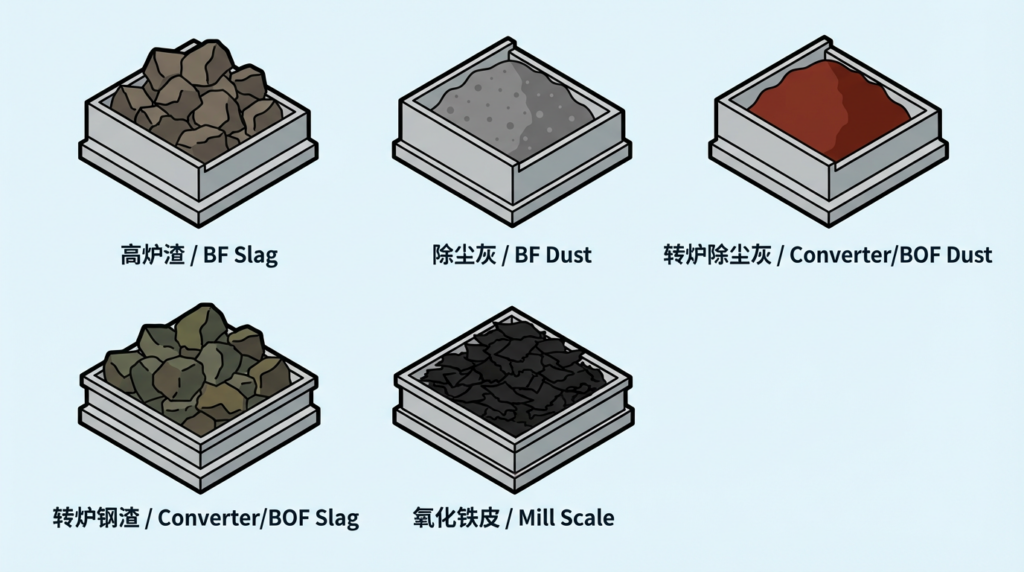
Steelmaking generates large volumes of by-products, including:
- Забастовка сталелитейщиков (BF slag, BOF slag, converter slag, EAF dust)
- Dust and sludge (BF dust, BOF dust, converter dust, EAF dust)
- Окалина
Without effective treatment, these materials create multiple layers of pressure:
Environmental and Land Impact
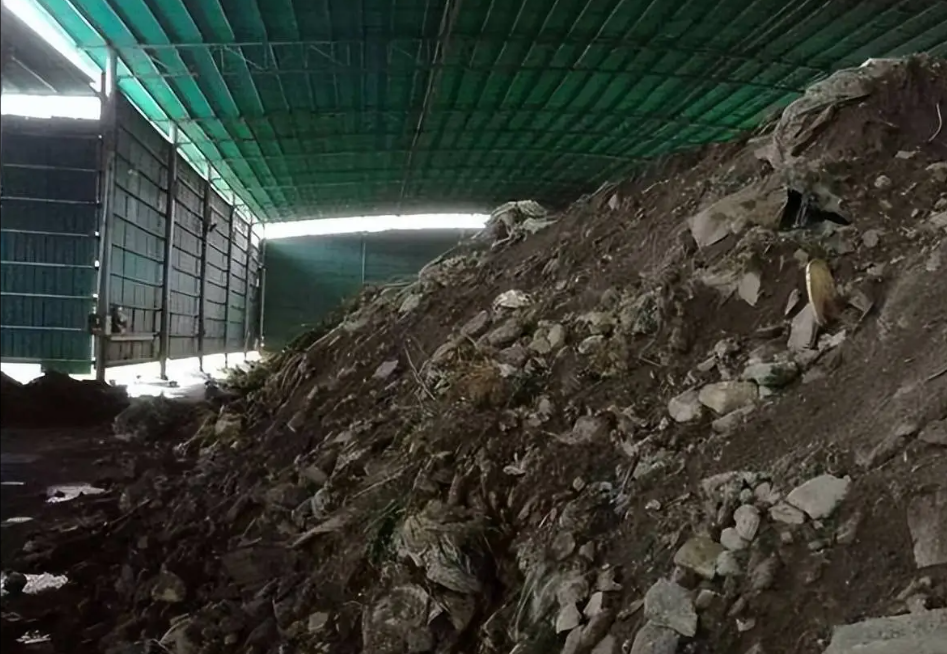
Accumulated waste occupies valuable land and poses risks of soil and groundwater contamination through leaching.
Resource Misallocation
Steel by-products contain valuable minerals. Treating them as waste instead of resources represents a significant loss of potential value.
Rising Operational Costs
With tightening environmental regulations, disposal costs and compliance risks—including penalties—are becoming a major financial burden for steel producers.
3. Why Circular Recycling is No Longer Optional
Faced with these challenges, adopting a circular economy model is no longer a strategic choice—it is a necessity for survival.
Lowering Carbon Intensity
Increasing the use of scrap steel in production is one of the most effective decarbonization pathways.
Compared to traditional BF-BOF processes, EAF steelmaking using scrap can reduce emissions to one-fifth to one-quarter.
Countries like Malaysia have already identified circular economy development as a core strategy for achieving net-zero emissions by 2050.
From Waste to Resource: Achieving Near Zero Landfill
Leading global steel companies have demonstrated that applying the 3R principles (Reduce, Reuse, Recycle) can achieve over 99% solid waste utilization.
For example:
- Processed steel slag can be used in road construction
- It can serve as a soil conditioner
- They can be briquetted properly and reintroduced into converter furnace or EAF as slagging agents or coolants, which saves resources
This transforms industrial waste into valuable economic inputs.
Regulatory and Financial Access Depends on Recycling Capability
New policies across ASEAN are making recycling capability a market entry requirement.
In Vietnam, only facilities equipped with proper recycling technology are allowed to import scrap materials.
At the same time, frameworks like the ASEAN Taxonomy for Sustainable Finance explicitly prioritize investments in resource resilience and circular economy transition.
In other words, companies without recycling capability risk being excluded—not just environmentally, but financially.
Conclusion: From Steel Producer to Resource Integrator
The ASEAN steel industry is under unprecedented pressure—from global carbon tariffs, local environmental regulations, and public health expectations.
Solid waste recycling is no longer just a solution to waste accumulation—it is a strategic pathway to:
- Reduce environmental footprint
- Maintain export competitiveness
- Avoid trade penalties
- Unlock new value streams
The future belongs to companies that can transform from production centers into resource circulation hubs.
Only by decoupling growth from carbon emissions and waste generation can ASEAN steel producers secure their position in the global low-carbon economy.
Jianjie Group Mission: Turning Waste into Value
At Jianjie Group, we believe that industrial waste is not a burden—it is an untapped resource.
Through advanced binder technologies and cold briquetting solutions, we help steel producers transform dust, sludge, slag, and fines into high-value briquettes that can be reused in production.
Our mission is simple but powerful:
Develop Green Technology for a Sustainable World.
С более 15 years of experience in providing solid waste treatment solutions for steel plants in China, Цзяньцзе has supported hundreds of enterprises, including leading steelmakers such as Shougang Group and Baowu Steel Group.
By combining tailored binder formulations with process optimization, we enable steel producers to:
- Improve waste utilization efficiency
- Reduce solid waste disposal and environmental risks
- Lower carbon emissions across production processes
- Enhance overall operational sustainability
Our solutions are built on one core principle:
Green technology that delivers both environmental and economic value.
As the global steel industry accelerates toward decarbonization and circular production, Jianjie is committed to empowering steel plants worldwide with practical, proven solutions—turning environmental pressure into competitive advantage.
Join Us at SEAISI 2026
Jianjie Group will be exhibiting at SEAISI 2026 on May 18-21 2026 in Singapore, where we will showcase our latest solutions in steel waste recycling, briquetting technology, and binder applications.
👉 Let’s discuss how to reduce waste, lower emissions, and improve your plant’s efficiency.